Lanyue Metal Technology
[email protected]/[email protected]
24 Hour Service - 7 Days a Week
Industry News
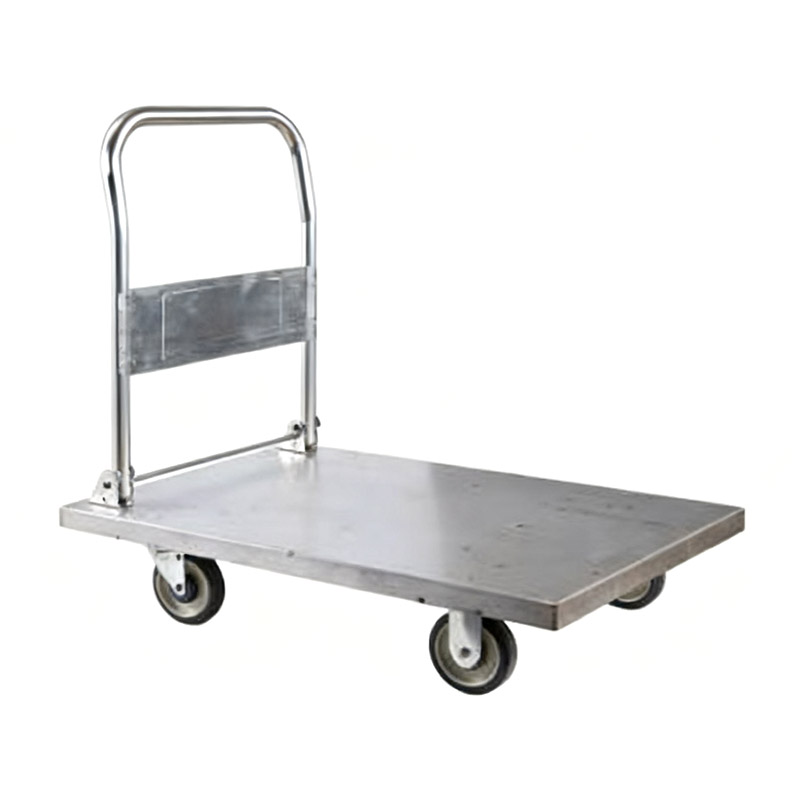
A Heavy-Duty Steel Folding Trolley is one of the most versatile material-handling tools available. It bridges the gap between a simple hand truck and a full-scale industrial cart. Whether you are moving boxes in a warehouse, shifting furniture during an office relocation, or transporting tools across a construction site, this equipment is built to handle the strain. Unlike plastic or aluminium alternatives, the steel construction provides superior resistance to bending, impact, and long-term wear.
This guide explores the specific applications, technical capabilities, and practical considerations for using a steel folding trolley in various environments.
Content
The core value of this trolley lies in its ability to support heavy loads while remaining portable and storable. Its design caters to tasks that would otherwise require multiple trips or cause physical strain.
In warehouse settings, the trolley is essential for order picking, stock replenishment, and loading bay transfers. The steel platform allows operators to move multiple cartons or heavy cases in a single trip. Many models can support capacities from 150 kg to 400 kg, making them suitable for everything from consumer goods to industrial components [citation:1]. The folding feature also helps facilities maximize storage space by reducing the cart's footprint by approximately 50% when not in use [citation:1].
Construction professionals rely on these trolleys to move tools, fasteners, power equipment, and even small building materials across job sites. The sturdy steel frame resists the bumps and rough handling common to active work zones. Some units feature pneumatic or solid rubber wheels with shock absorption to handle uneven terrain and reduce noise by up to 40% compared to standard wheel designs [citation:1][citation:8]. The ability to fold down side panels or remove removable containers transforms the unit into a flatbed for larger or oddly shaped items [citation:8].
In retail, the trolley facilitates stock replenishment, inventory counts, and equipment movement. Two-tier steel designs are frequently used to maximise space and carry volumes of merchandise in one go, increasing efficiency for large retail environments [citation:6]. The swivel front wheels provide tight maneuverability in busy aisles [citation:6]. Trade show exhibitors also commonly use these carts for transporting display materials, audio-visual equipment, and product samples [citation:5].
For homeowners, a heavy-duty steel folding trolley is invaluable during moves, major furniture deliveries, gardening projects, or bulk shopping trips. Garden variants with collapsible sides and removable liners are available for moving heavy bags of soil, stone, or tree cuttings [citation:8]. In flats and apartments, the foldable design means the trolley can be conveniently stored under a bed or in a cupboard when not in use [citation:4].
Understanding the technical features helps in selecting the right trolley for specific tasks. The following table compares common specifications found across different models [citation:1][citation:2][citation:4].
| Feature | Base / Light-Duty | Advanced / Heavy-Duty | Industrial / Pro |
|---|---|---|---|
| Load Capacity | 150 – 220 lbs (68 – 100 kg) | 330 – 500 lbs (150 – 227 kg) | 660 – 880 lbs (300 – 400 kg) |
| Frame Material | Standard steel tube | Reinforced / Alloy steel | High-grade steel, powder-coated |
| Wheel Type | Solid rubber, fixed rear | TPU-coated / 360° swivel front | Shock-absorbing, pneumatic, or stair-climbing |
| Handle Adjustment | Fixed height | 2-position telescopic | Fully adjustable telescopic |
| Folded Dimensions (approx.) | 34 x 16 x 4 in | 30 x 18 x 5 in | 29 x 18 x 6 in |
The wheel type significantly affects performance [citation:1][citation:8]:
Choosing the correct trolley goes beyond just picking the cheapest option. Consider these factors based on your intended use.
For occasional home use or light office tasks, a capacity of 150 kg is usually sufficient [citation:2]. For daily commercial or industrial use, a minimum capacity of 300 kg is recommended to ensure longevity and safety. Overloading a trolley, even occasionally, can bend the steel frame or damage the folding mechanism [citation:1][citation:4].
The folding mechanism must be robust. Look for reinforced hinges, especially in heavier-duty models. The folded size should fit your intended storage space. Some designs fold to a height of just 100 mm, ideal for sliding under a vehicle seat or between shelving units [citation:4]. Models with a locking mechanism prevent accidental folding during use.
A telescopic or adjustable handle allows users of different heights to push the trolley comfortably, reducing back strain. Ergonomic handles with knuckle protection are valuable for frequent users [citation:3]. Some two-in-one models also allow the handle to be used in a vertical or horizontal orientation to suit different loads [citation:4].
Practical insight: If you primarily move items on stairs, prioritise a trolley with dedicated stair-climbing wheels and a non-slip platform. For smooth warehouse floors, focus on swivel casters for better maneuverability.
Steel trolleys are durable, but they require basic care to maintain performance. Regular lubrication of the folding hinges and wheel bearings is recommended, especially for advanced models with complex mechanisms [citation:1]. Inspect the wheels for wear or debris buildup, particularly on job sites. Powder-coated steel provides a protective layer against rust, but if the coating is scratched, it is wise to touch it up to prevent corrosion.
Clean the trolley with a damp cloth and mild detergent. Avoid using high-pressure water jets, which can force moisture into the bearings and hinges. Properly maintained, a quality steel folding trolley can last a decade or more, representing a low cost per use over its lifetime.
Typical capacities range from 150 kg (330 lbs) for light-duty models to 400 kg (880 lbs) for industrial versions. Many standard models handle 300 kg (660 lbs) comfortably [citation:1][citation:4].
Yes, but you need a model specifically designed with stair-climbing wheels. These trolleys have 6 or more wheels arranged in a rotating cluster to step over edges [citation:2].
Steel offers higher load capacity, better impact resistance, and greater stability under heavy loads. Aluminium is lighter and rust-proof but generally has a lower weight limit and is more prone to bending under extreme stress.
No. The folding design is the primary advantage. Most models fold to a compact size, often less than 50% of their unfolded dimensions, allowing storage in car trunks, closets, or under beds [citation:1][citation:4].
Routine maintenance includes lubricating the folding hinges and wheel bearings, checking wheel condition, and cleaning the frame. Powder-coated finishes resist rust, but scratches should be treated to prevent corrosion [citation:1].
Yes, particularly models with pneumatic or solid rubber wheels designed for uneven outdoor terrain. Ensure the frame has a corrosion-resistant coating if used frequently outdoors [citation:8].
A 2-in-1 trolley converts between a vertical 2-wheel hand truck and a horizontal 4-wheel platform cart without tools. This design offers extra versatility for moving both tall and wide loads [citation:4].
PRODUCTS
Carbon Steel Fastenerss Rolling Bearings Heavy-Duty Steel Folding Trolleys Swivel Casters Bolt kitsContact
1st Floor, Building 4, East Side, Jinger Road, Yuxin Town, Nanhu District, Jiaxing City, Zhejiang Province, China
[email protected][email protected]
+86-137 0583 8919+86-135 8638 0656
Copyright © Jiaxing Lanyue Metal Technology Co., Ltd. All Rights Reserved.
Custom High-Performance Industrial Fasteners Manufacturers, Suppliers