Lanyue Metal Technology
[email protected]/[email protected]
24 Hour Service - 7 Days a Week
Industry News
The choice between a swivel caster and a rigid caster is one of the most fundamental decisions in material handling equipment design. While both serve the purpose of making objects mobile, they offer fundamentally different movement characteristics that directly impact operational efficiency, safety, and equipment longevity. Understanding the specific reasons to choose a swivel caster over a rigid counterpart requires examining the mechanical differences, application requirements, and performance trade-offs that define each caster type.
Content
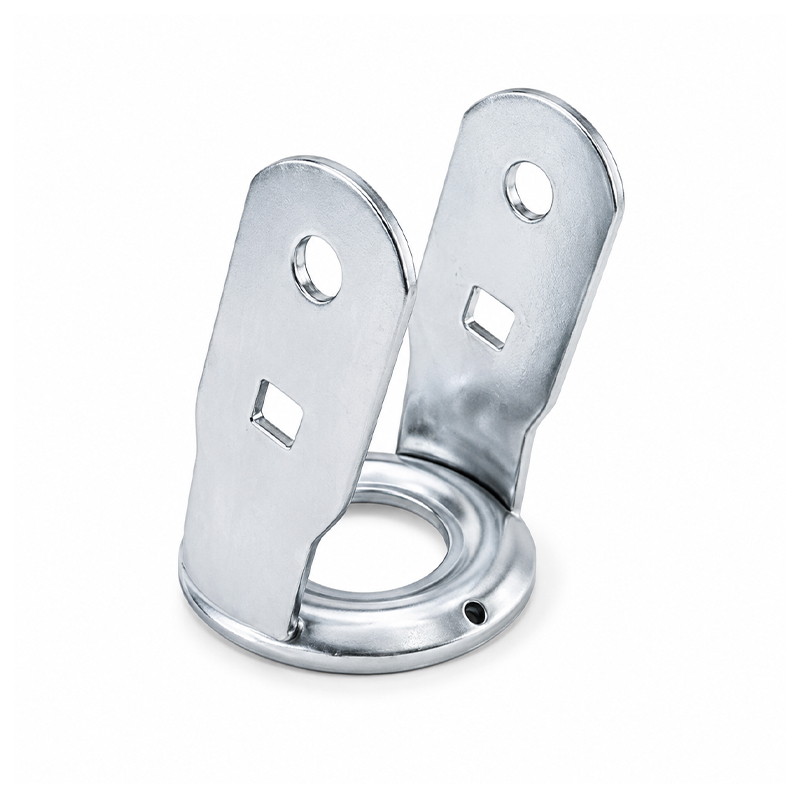
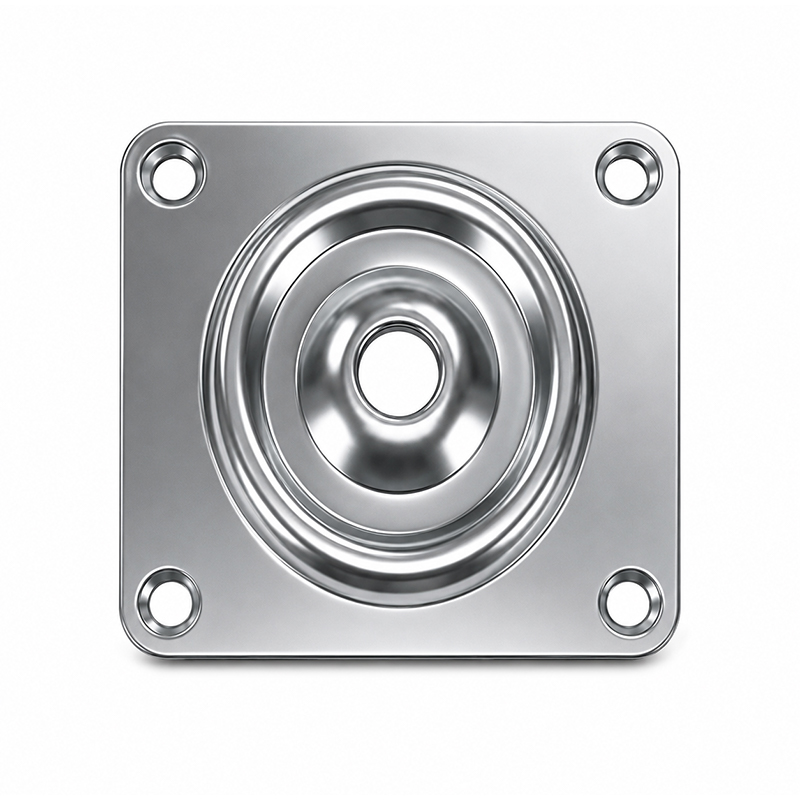
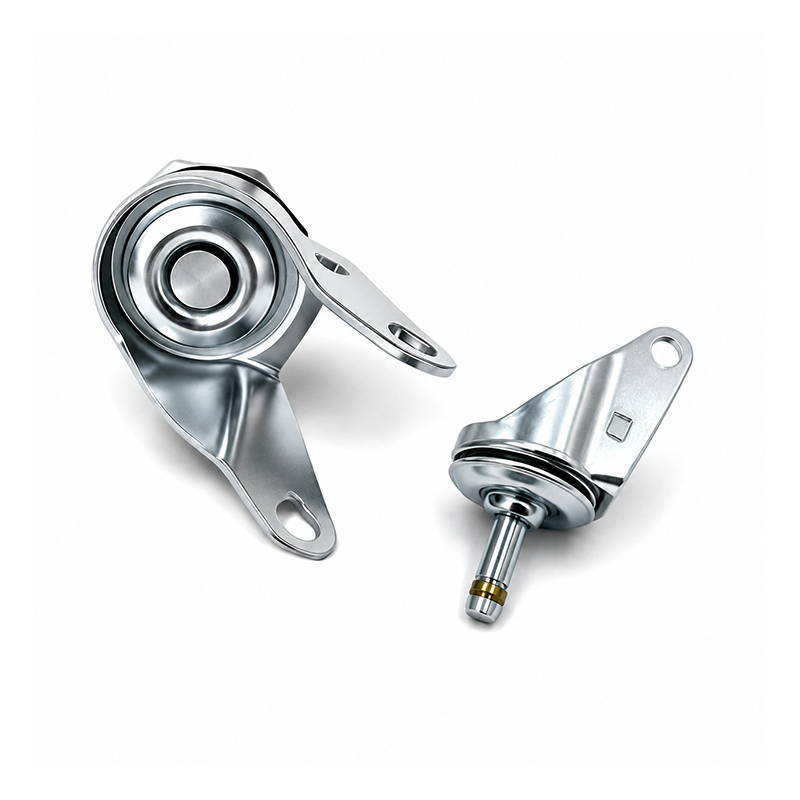
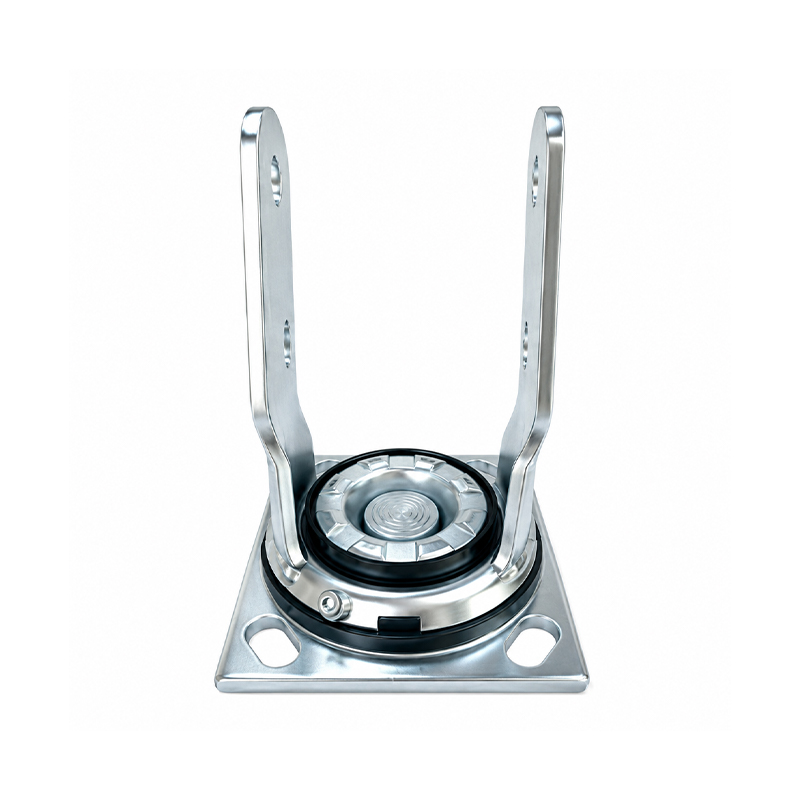
A swivel caster features a cylindrical swivel section containing ball bearing raceways that allow the wheel to rotate 360 degrees around a vertical axis. This design enables the attached equipment to move in any direction, navigate tight corners, and reposition with minimal effort. The swivel mechanism functions similarly to a lazy susan, with the wheel's center hub revolving around the center of the swivel section swivel caster .
In contrast, a rigid caster (also called a fixed caster) is mounted to roll only forward and backward in a straight line. These casters lack a swivel mechanism, making them simpler in construction but limited to linear movement. The rigid design provides inherent directional stability and can support heavier loads because there is no swivel section dealing with perpendicular stress forces .
Key Insight: The fundamental difference lies in the swivel offset—the distance between the centerline of the wheel axis and the centerline of the swivel axis. Larger offset enables easier turning but reduces load capacity and increases bearing wear. Smaller offset supports heavier loads but offers less responsive steering .
The primary reason to select a swivel caster over a rigid caster is superior maneuverability in confined spaces. Swivel casters excel in environments where frequent direction changes, tight cornering, and precise positioning are required. The 360-degree rotation capability allows equipment to pivot on the spot, turn around in narrow aisles, and navigate complex pathways without requiring excessive space .
Road case applications demonstrate this advantage clearly. Swivel casters allow cases to maneuver in tight spaces backstage, navigate curves in loading docks, and position precisely for transport. The ability to "cast" or turn in multiple directions makes swivel casters indispensable when equipment must navigate through crowded environments .
Choosing a swivel caster instead of a rigid caster involves accepting certain performance trade-offs. Understanding these compromises is essential for making informed equipment design decisions.
| Characteristic | Swivel Caster | Rigid Caster |
|---|---|---|
| Directional Control | 360-degree movement | Straight line only |
| Load Capacity (same wheel size) | Lower | Higher |
| Straight-Line Stability | Lower (prone to wobble) | Higher |
| Maintenance Requirements | Higher (more moving parts) | Lower |
| Wear on Moving Parts | Higher | Lower |
Swivel casters can be more challenging to control on straight runs, particularly at higher speeds or with heavy loads. This instability manifests as "caster flutter" or wobble—an oscillation that can compromise safety and equipment performance. The 360-degree turning mechanism creates additional pressure points and potential wear over time, potentially reducing longevity unless properly maintained .
When all four casters on a cart are swivel casters, the equipment becomes difficult to steer in a straight line. This is why many industrial applications combine two swivel and two rigid casters to balance maneuverability with directional control .
Rigid casters generally offer higher load capacities than swivel caster options of the same size and wheel material. This capacity advantage stems from the simpler, more robust construction of rigid casters. The swivel mechanism in a swivel caster introduces additional stress points, particularly where the swivel section meets the mounting plate .
For applications requiring maximum load capacity with directional flexibility, engineers must carefully evaluate the trade-off between capacity and maneuverability. The swivel offset plays a critical role here: casters with larger offset values support lighter loads but offer easier turning, while smaller offset values support heavier loads with less responsive steering .
Practical Guideline: For loads exceeding 1,000 pounds per caster in applications requiring frequent turns, consider upgrading to a heavy-duty swivel caster with a kingpinless design, which distributes load stress more evenly and lasts longer than standard swivel casters .
In many industrial and commercial applications, the optimal solution is not choosing exclusively between swivel and rigid casters but rather combining both types on the same equipment. The most common configuration uses two swivel casters and two rigid casters mounted in parallel. This arrangement provides balanced performance: the rigid casters maintain straight-line tracking while the swivel casters enable turning and repositioning .
Dual-wheel swivel casters offer another variation on this approach. These casters provide a wider footprint with two wheels mounted side by side on a single swivel mechanism. The differential action between the two wheels enables easier swiveling than a single wheel with the same footprint, while the increased surface area supports higher capacity without increasing overall height .
For demanding applications requiring both maneuverability and durability, kingpinless swivel caster designs represent a significant advancement over standard swivel casters. Kingpinless casters are not held together by a bolt or rivet; instead, the load stress is distributed more evenly across the swivel mechanism, resulting in longer service life and better performance under demanding conditions .
Kingpinless swivel casters excel in applications involving:
While kingpinless casters have a higher initial cost than standard swivel casters, the extended service life and reduced maintenance requirements often justify the investment in demanding industrial applications .
The operating environment significantly influences the decision between swivel and rigid casters. The swivel mechanism introduces additional potential failure points in harsh conditions:
Hospital and laboratory environments often specify swivel casters with soft rubber treads, non-marking properties, and ball bearings protected by thread guards. These features ensure quiet rolling, floor protection, and reliable swivel performance in sensitive environments .
One significant advantage of modern swivel caster designs is the availability of advanced brake and locking mechanisms. Total lock systems simultaneously apply a brake to the wheel and lock the swivel mechanism, preventing both rolling and swiveling motion .
This functionality is particularly valuable in applications where equipment must remain stationary and stable, such as hospital beds, medical carts, and workstations. The ability to lock both wheel rotation and swivel action ensures that equipment stays in place reliably when parked.
Other locking options include:
These braking options add versatility to swivel casters, allowing them to function as rigid casters when needed while retaining the maneuverability advantages of swivel design.
Based on the analysis of performance characteristics, application requirements, and trade-offs, here is a practical framework for deciding when a swivel caster is the preferred choice:
For many applications, the optimal solution involves both types working together. A cart with two swivel casters and two rigid casters provides an excellent balance of maneuverability and stability, making it the most common configuration in industrial material handling .
Swivel casters wobble because the swivel mechanism introduces a degree of freedom that can oscillate, especially at speed or under uneven loads. The offset between the wheel axis and swivel axis creates a self-steering effect that can lead to flutter. Rigid casters lack this mechanism, so they maintain a fixed direction without oscillation.
No, a rigid caster cannot be converted into a swivel caster because the swivel mechanism requires a completely different mounting structure with bearing raceways. Instead, you can use a swivel caster with a swivel lock to temporarily mimic a rigid caster's behavior when needed.
The most common configuration uses two swivel casters and two rigid casters. This provides a good balance of maneuverability and straight-line stability. All-swivel configurations are used only when maximum maneuverability in tight spaces is the absolute priority, accepting reduced directional control.
No, rigid casters generally have higher load capacities than swivel casters of the same size and wheel material because they lack the swivel mechanism, which introduces additional stress points. However, heavy-duty swivel casters with kingpinless designs can approach the capacity of rigid casters while retaining maneuverability.
A standard swivel caster uses a kingpin (bolt or rivet) to hold the swivel section together. A kingpinless design eliminates this pin and distributes load stress more evenly across the swivel mechanism. This results in longer service life, better performance under heavy loads, and reduced maintenance requirements.
A total lock applies a brake to the wheel and locks the swivel mechanism simultaneously. This prevents both rolling and swiveling, making equipment stay firmly in place. This is essential for medical carts, workstations, and any application where stability during parking is critical.
Yes, swivel casters are typically more expensive than rigid casters because they have more moving parts, including bearing raceways and precision-machined swivel sections. The added complexity in manufacturing and assembly increases the cost, but the maneuverability benefits often justify the higher price.
Swivel casters can be used on most floor types, but wheel material selection is critical. Soft rubber treads are suitable for sensitive floors like tile or wood, while polyurethane or nylon wheels are better for concrete. For rough terrain, pneumatic swivel casters provide cushioning and improved rolling performance.
PRODUCTS
Carbon Steel Fastenerss Rolling Bearings Heavy-Duty Steel Folding Trolleys Swivel Casters Bolt kitsContact
1st Floor, Building 4, East Side, Jinger Road, Yuxin Town, Nanhu District, Jiaxing City, Zhejiang Province, China
[email protected][email protected]
+86-137 0583 8919+86-135 8638 0656
Copyright © Jiaxing Lanyue Metal Technology Co., Ltd. All Rights Reserved.
Privacy
Custom High-Performance Industrial Fasteners Manufacturers, Suppliers