
 English
  Español
  Deutsch
 Home / News / Industry News / Swivel Casters vs Rigid Casters: Choosing a Combination for Industrial Trolleys
-
 Lanyue Metal Technology
-
 [email protected]/[email protected]
-
 24 Hour Service - 7 Days a Week


Industry News
Home / News / Industry News / Swivel Casters vs Rigid Casters: Choosing a Combination for Industrial Trolleys
Industry News
Sep 11,2026
Swivel Casters vs Rigid Casters: Choosing a Combination for Industrial Trolleys
The right caster configuration can make an industrial trolley feel effortless to move or difficult to control. Swivel casters and rigid casters solve different handling problems, and the strongest trolley designs usually combine both. This guide compares swivel casters vs rigid casters, explains how each caster type behaves, and shows how to choose the right combination for industrial trolleys.
Think of each caster as a support point with a steering characteristic. A swivel caster rotates around a vertical axis, so the wheel follows the push direction. A rigid caster keeps the wheel in a fixed plane, so the trolley tracks in a straight line. Most applications need a deliberate mix of both.
Content
Swivel Casters vs Rigid Casters: Core Differences
Swivel caster basics
A swivel caster has a mounting plate or bracket, a pivot and raceway assembly, and a fork that carries the wheel. Because the fork rotates around a vertical axis, the wheel can change direction as the trolley moves. This design provides maneuverability in narrow aisles and around equipment, but the extra moving parts require more attention to alignment and wear.
Rigid caster basics
A rigid caster, also called a fixed caster, holds the wheel in a fixed plane. The wheel cannot steer on its own, and the bracket is usually simpler and stronger for a given weight. Rigid casters are therefore good for straight-line tracking, towing, and applications where lateral stability is more important than turning radius.
To understand how both designs work, it helps to inspect the key components of a caster assembly before making a final selection.
| Comparison Factor | Swivel Caster | Rigid Caster |
|---|---|---|
| Steering range | 360 degrees | Fixed in one plane |
| Maneuverability | Excellent in tight spaces | Good only when the whole trolley turns |
| Straight-line control | Requires operator correction | Very stable |
| Assembly complexity | Raceway, bearing, and fork | Simpler bracket and axle |
| Load path | More moving parts under load | Direct load path |
| Typical trolley location | Leading or steering end | Trailing or load-guide end |
When to Choose Swivel Casters
Swivel casters are the natural choice when an industrial trolley must work in tight spaces, change direction frequently, or be positioned precisely beside a workstation. They are also useful on the leading end of the trolley, where they help guide the equipment into the next aisle or around obstacles.
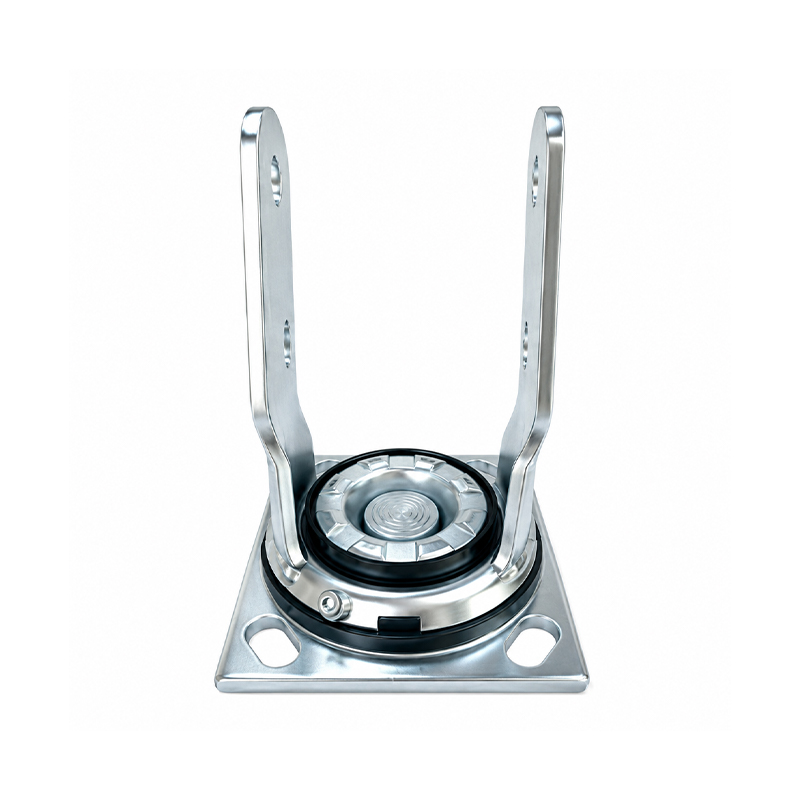
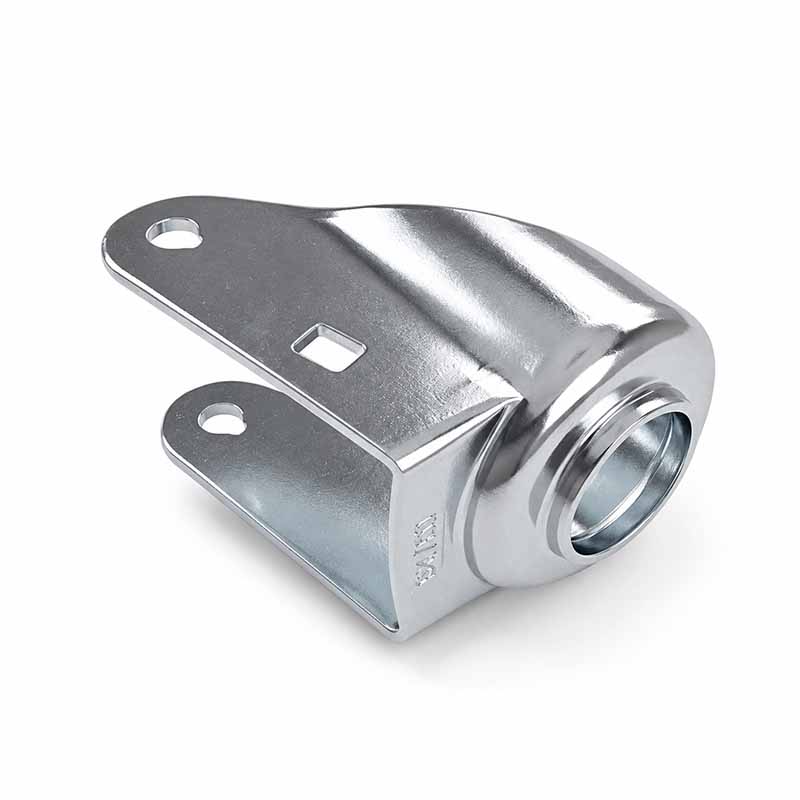
Because swivel casters experience side loads when they steer, the bracket must be stiff and accurately machined. For heavy applications, a forged zinc-plated bracket offers good strength and corrosion resistance in demanding industrial environments.
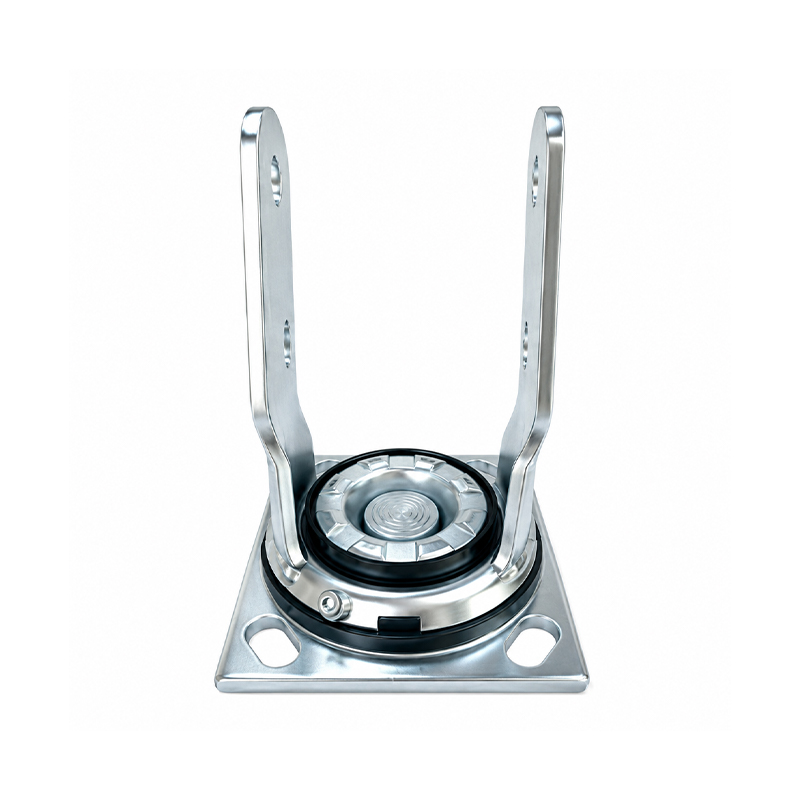 Heavy Duty Zinc Plated Forged Steel Swivel Caster Bracket for 6 and 8 Inch WheelsThis forged steel swivel bracket offers high load capacity and corrosion resistance, ideal for heavy industrial carts and transport equipment where precise steering and durability are required.View Product →
Keep in mind that swivel casters need extra clearance for their turning radius and have more moving parts than rigid casters, so regular inspection and maintenance matter.
When to Choose Rigid Casters
Rigid casters are the stabilizers of an industrial trolley. On a trolley, they belong at the trailing end opposite the leading swivel wheels, or on any axle that should remain parallel to the direction of travel. Applications with long straight routes, towed trolleys, or higher travel speed benefit from rigid casters because they reduce wandering and keep the load aligned.
A rigid caster has a simple load path: the bracket, axle, and wheel are arranged in one plane. That simplicity often means lower cost, lighter weight, and fewer inspection points than a swivel caster of comparable capacity.
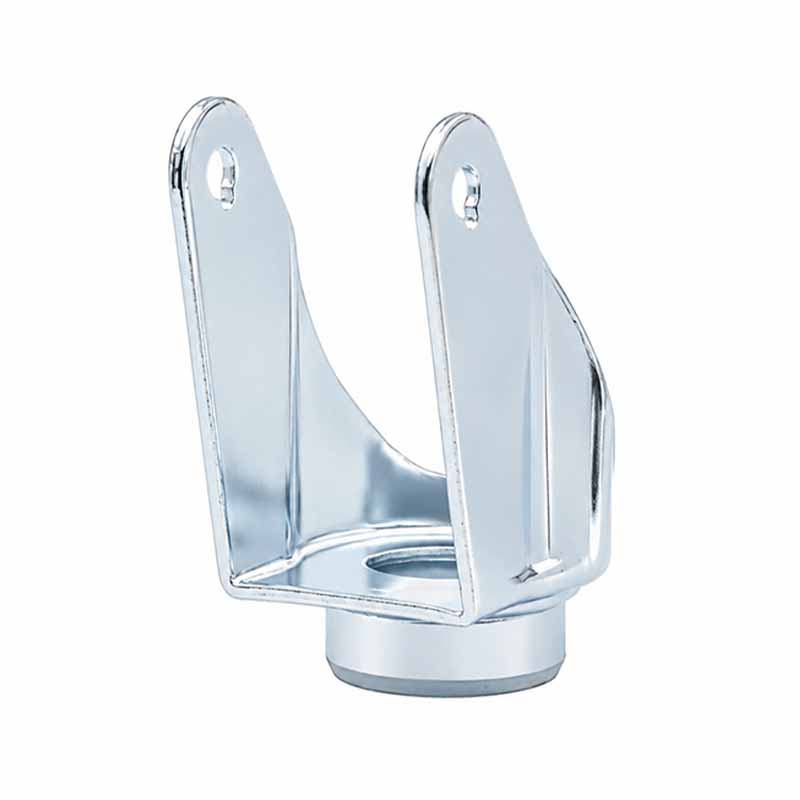
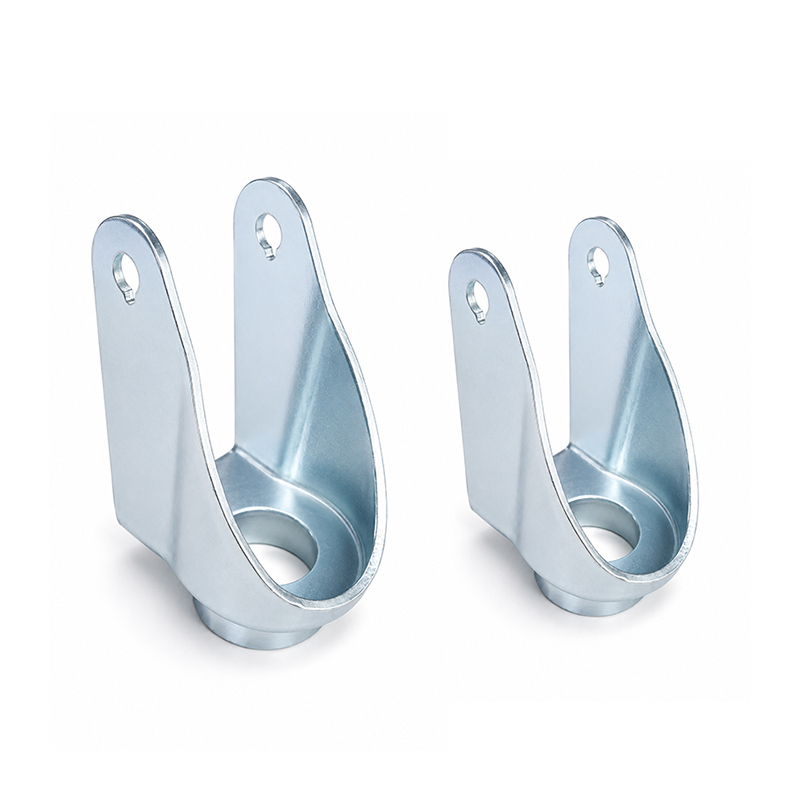
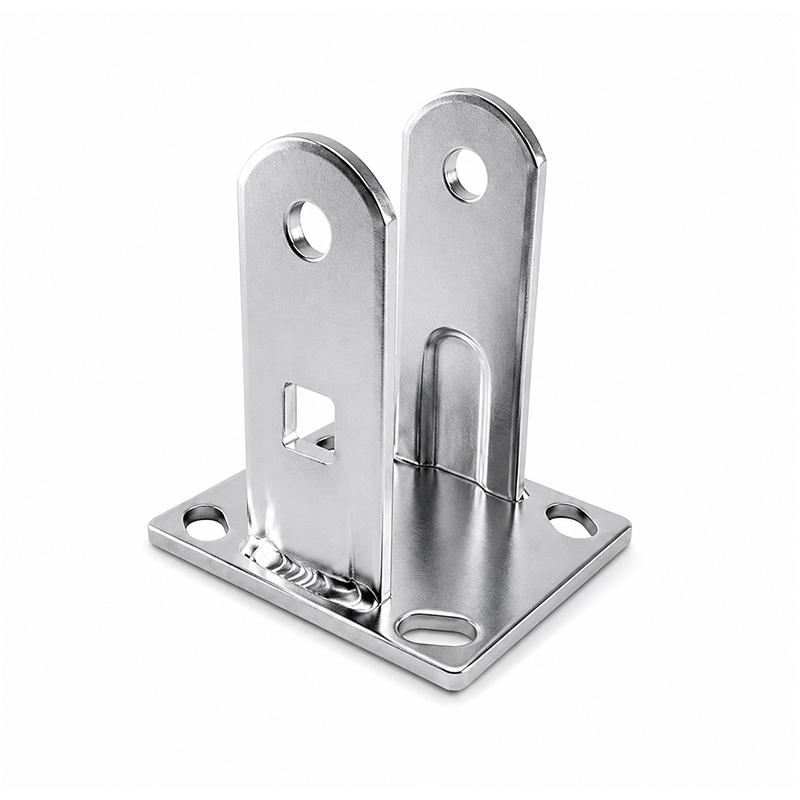 Heavy-Duty Galvanized Fixed Caster Bracket for 3, 4, and 5 Inch WheelsA rigid one-piece carbon steel bracket with zinc plating, providing stable support and reduced vibration for industrial carts and shelving that move primarily in straight lines.View Product →
For industrial trolleys that move mostly in one direction, rigid casters should be a key part of the layout rather than an afterthought.
How to Choose the Right Combination for Industrial Trolleys
In practice, the best layout depends on the travel path, load distribution, floor condition, and how the trolley is pushed or pulled. For most industrial trolleys, start with two swivel casters on the leading end and two rigid casters on the trailing end. The swivel wheels reduce turning effort, while the rigid wheels keep the trolley moving in a predictable line.
Recommended starting point: two swivel and two rigid casters. This balanced layout works well for warehouse trolleys, platform trucks, maintenance carts, and many custom industrial applications.
Maximum maneuverability
All swivel casters
Good for positioning, short moves, and confined work areas. Directional control requires more attention and may not suit long straight runs.
Balanced default
Two swivel and two rigid
The most reliable starting point for general industrial trolleys. It combines easier steering with stable tracking.
Line-flow transport
Mostly rigid casters
Use for tow trains, long corridors, or loads that always travel in a fixed path. Maneuverability is reduced.
If the trolley will be pushed from either end, give more thought to which end is leading and which end is trailing. Keep the rigid casters aligned with the main travel direction so the trolley does not wander during normal use.
Load Capacity, Bearings, and Environmental Factors
Every caster carries a share of the total weight, but the share is not always equal. The distribution depends on the load center, caster positions, and floor condition. A practical rule is to divide the total trolley and payload weight by the number of casters, then multiply by a safety factor of 1.25 to 1.5 for manual operation. For powered towing or rough surfaces, use a higher factor.
Wheel bearings affect rolling resistance and service life. Deep groove ball bearings are common on industrial trolleys, while integrated or nonstandard bearing designs can simplify compact wheel assemblies and help maintain consistent load distribution.
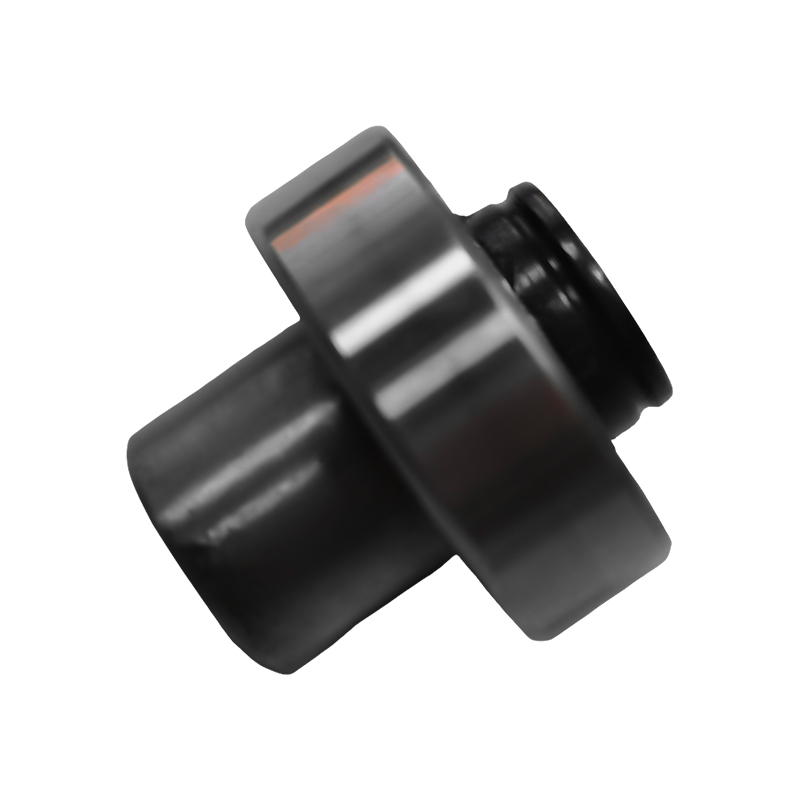 Non-Standard 608RS Integrated Cart Bearings with 300KG or 150KG CapacityPrecision bearings engineered for smooth, quiet rolling and low resistance, compatible with hand carts, food service carts, and equipment casters in demanding environments.View Product →
Material selection should match the working environment. Zinc-plated carbon steel suits many workshop and warehouse floors, while galvanized or stainless steel components provide better protection in humid, washdown, or chemically exposed areas.
Step-by-Step Selection Checklist
Use this checklist to turn the comparison into a final decision.
- Map the travel path: identify straight runs, turns, aisles, ramps, and workstation positioning requirements.
- Select a starting layout: two swivel and two rigid casters is the most balanced starting point for general industrial trolleys.
- Calculate the required capacity: divide the total weight by the number of casters, then apply a safety factor.
- Check the bracket design: confirm mounting hole pattern, swivel radius, floor clearance, and bolt size.
- Choose wheel size and tread material based on floor type and typical load.
- Select the bearing type based on load, speed, and desired rolling resistance.
- Add brakes, positioning pins, or locks where operators need to stop or hold position.
- Confirm materials and surface treatment for the working environment.
For customized industrial trolleys, work with a supplier that can provide consistent mounting tolerances, documented quality control, and OEM support when the design has to be adapted.
Frequently Asked Questions
Q1: Should all four casters on an industrial trolley be swivel casters?
All swivel casters give maximum maneuverability, which is useful for positioning in tight areas. However, they can make a trolley harder to keep in a straight line. Two swivel and two rigid casters usually create a more predictable balance for typical industrial applications.
Q2: Where should rigid casters be placed in a swivel and rigid combination?
Place rigid casters at the end that should follow the travel path, normally the trailing end opposite the leading swivel casters. If the trolley is towed, align the rigid wheels with the tow line so the trolley tracks correctly.
Q3: How do I calculate the required caster load capacity?
Divide the total trolley and payload weight by the number of casters, then apply a safety factor of 1.25 to 1.5 for manual operation. Compare the result with the rated capacity of the weakest component in the caster assembly.
Related Products
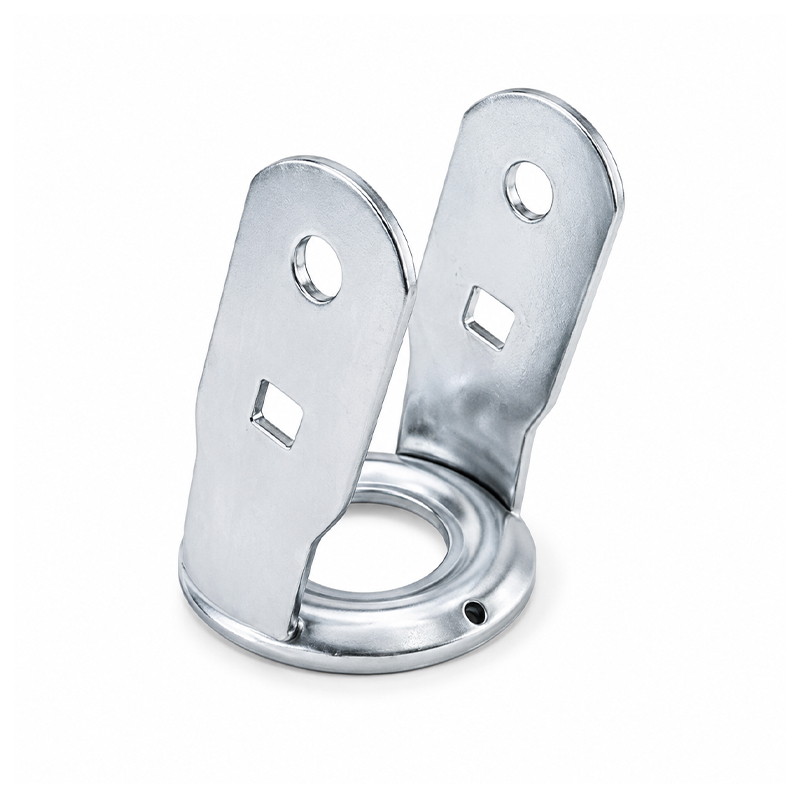

PRODUCTS
Carbon Steel Fastenerss Rolling Bearings Heavy-Duty Steel Folding Trolleys Swivel Casters Bolt kitsContact
 1st Floor, Building 4, East Side, Jinger Road, Yuxin Town, Nanhu District, Jiaxing City, Zhejiang Province, China
 [email protected][email protected]
 +86-137 0583 8919+86-135 8638 0656
Copyright © Jiaxing Lanyue Metal Technology Co., Ltd. All Rights Reserved.
Privacy
Custom High-Performance Industrial Fasteners Manufacturers, Suppliers
