
 English
  Español
  Deutsch
 Home / News / Industry News / How Heavy-Duty U-Shaped Carbon Steel Caster Brackets Prevent Load Failure
-
 Lanyue Metal Technology
-
 [email protected]/[email protected]
-
 24 Hour Service - 7 Days a Week

Industry News
Home / News / Industry News / How Heavy-Duty U-Shaped Carbon Steel Caster Brackets Prevent Load Failure
Industry News
Sep 17,2026
How Heavy-Duty U-Shaped Carbon Steel Caster Brackets Prevent Load Failure
Heavy-duty U-shaped carbon steel caster brackets form the structural link between industrial equipment and the wheels that move it. In warehouses, workshops, and production lines, these brackets carry static payloads and absorb dynamic loads from acceleration, braking, and uneven floors. When a bracket fails, the consequences go far beyond a broken caster: equipment can tilt, loads can drop, and downtime can cascade across an entire operation. This article explains how the U-shaped carbon steel design prevents load failure, which failure modes matter most, and what to look for when selecting brackets for demanding applications.
Content
- 1 What Load Failure Means in a Caster Bracket
- 2 How the U-Shaped Geometry Distributes Stress
- 3 Carbon Steel Material and Manufacturing Quality
- 4 Mounting and Axle Integration: The Final Defense
- 5 Selection Guidelines for Load-Bearing Caster Brackets
- 6 Frequently Asked Questions
- 6.0.1 Q1: What is a heavy-duty U-shaped carbon steel caster bracket?
- 6.0.2 Q2: What causes caster bracket load failure?
- 6.0.3 Q3: How much load can a heavy-duty U-shaped carbon steel bracket carry?
- 6.0.4 Q4: Why choose zinc-plated carbon steel instead of stainless steel?
- 6.0.5 Q5: Can a bent or cracked bracket be repaired and reused?
- 7 Conclusion
What Load Failure Means in a Caster Bracket
Load failure occurs when a caster bracket can no longer support the forces acting on it without permanent deformation, cracking, or excessive wear. In a heavy-duty caster, the bracket is the structural bridge between the equipment frame and the wheel axle. Every kilogram of payload passes through it, along with the dynamic forces generated while the caster rolls, swivels, or strikes an obstacle.
Common Failure Modes
- Bracket bending or leg spread: the two sides of the fork move outward, making the wheel sit crooked and increasing rolling resistance.
- Cracks at bend radii: stress concentrates where the mounting plate transitions into the legs, especially when the inner radius is too sharp.
- Mounting hole elongation: repetitive movement and bolt loosening enlarge the bolt holes and allow the bracket to shift.
- Axle deformation: shock loads bend the axle seat, accelerating bearing wear and wheel wobble.
- Weld or kingpin separation: the rotating joint of a swivel bracket wears out or the weld bead cracks under fatigue.
| Failure Mode | Typical Cause | Result |
|---|---|---|
| Leg spread | Overload, thin plate | Wheel misalignment, higher friction |
| Bend crack | Stress concentration, fatigue | Sudden fracture, load drop |
| Axle deformation | Impact, excessive load | Bearing wear, wheel wobble |
| Weld or kingpin separation | Fatigue, weak joint | Complete caster failure |
Heavy-duty U-shaped carbon steel brackets are designed to counter these failure modes directly. The closed U-section shares load between two legs, and the material's yield strength and ductility prevent cracks from starting at critical bends.
How the U-Shaped Geometry Distributes Stress
A U-shaped caster bracket takes its name from its cross-section: two parallel vertical legs connected at the top by a mounting surface form an open channel. When load is applied, the force travels down from the mounting plate through both legs into the wheel axle. Because each leg carries roughly half of the vertical load, the peak stress in the material is reduced compared with a single-plate design of the same thickness.
The U-section also resists lateral bending and twisting. A loaded caster that swivels or hits a floor joint creates forces that are not purely vertical: they include lateral thrust and torsion that try to rack the bracket sideways. The closed U-shape provides a much higher second moment of area than a flat plate, which translates into greater bending stiffness and less deflection at the wheel axle.
In caster design, stiffness is safety. A rigid U-shaped bracket keeps the axle aligned, transfers shock energy into the legs instead of concentrating it in a weld or a sharp corner, and stops the progressive loosening that leads to larger failure cycles.
For applications that require steering or direction changes, the same U-shaped principle is applied to swivel configurations, where the U-bracket is combined with a rotating head. Zinc-plated carbon steel U-type swivel caster brackets are a standard solution in this category.
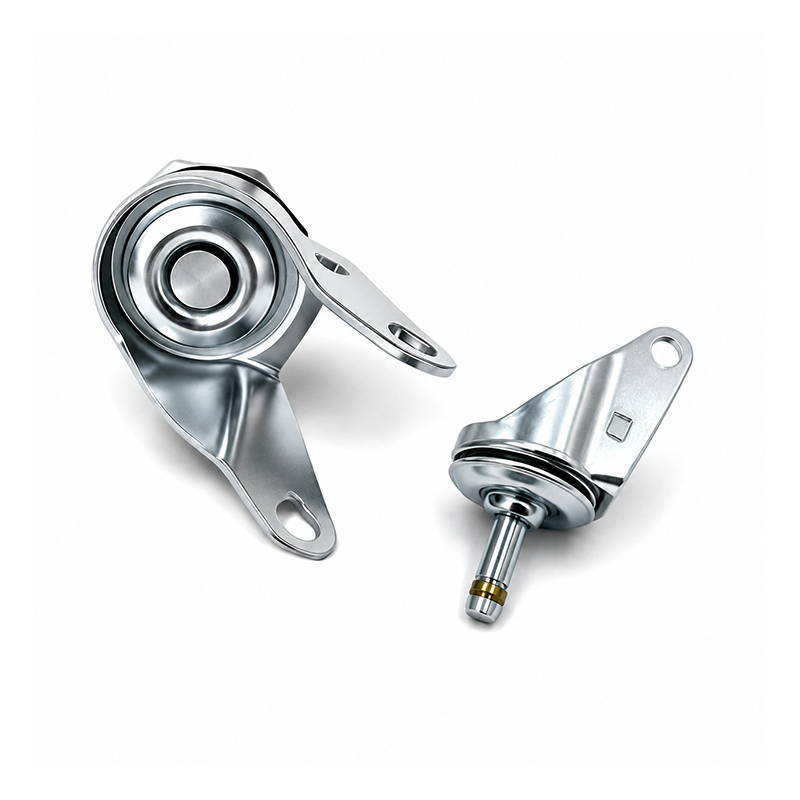 Zinc Plated Swivel Caster Bracket for 3 to 5 Inch WheelsThis zinc-plated carbon steel swivel bracket supports common caster sizes and uses a one-piece formed structure for stable clamping, making it suitable for carts, trolleys, and replacement applications.View Product →
Carbon Steel Material and Manufacturing Quality
Geometry alone cannot prevent load failure if the material lacks strength. Carbon steel is the dominant choice for heavy-duty caster brackets because it offers a well-understood balance of yield strength, hardness, ductility, and cost. Structural carbon steel plate can be stamped, cold-formed, or forged into a bracket shape; the forming process work-hardens the bend areas, raising local yield strength and improving resistance to permanent deformation.
Load pathTwo side legs share the vertical load
Bend controlGenerous inner radius limits stress concentration
Surface layerZinc plating preserves the effective cross-section
Steel thickness is an obvious but critical factor. Heavy-duty brackets are typically made from plate in the range of 4 to 8 mm, depending on the rated load, so that the cross-section resists bending without unnecessary weight. The bend radius matters just as much: a generous inner radius avoids the sharp stress concentration points that cause fatigue cracks over time.
Surface protection is another load-failure issue in disguise. Rust reduces the effective cross-section of the bracket and creates pitting points where cracks can initiate. Zinc plating gives carbon steel brackets long-term corrosion resistance while retaining the strength of the base metal. A well-made heavy-duty U-shaped carbon steel mounting bracket combines verified material grade, controlled bend quality, and a protective zinc layer in one component.
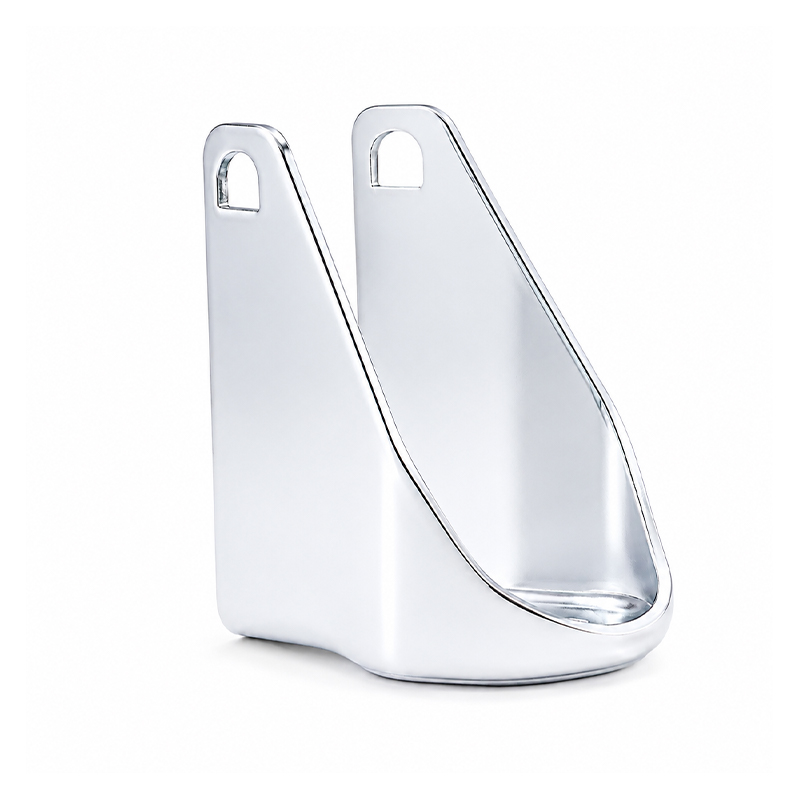 Heavy Duty Zinc Plated U-Shaped Caster Mounting BracketThis stamped carbon steel bracket offers a heavy-duty U-shape with zinc plating for corrosion resistance and precision arc holes for reliable mounting, suited for industrial casters and demanding equipment.View Product →
Mounting and Axle Integration: The Final Defense
Even the strongest bracket fails early if it is not mounted correctly. Load failure at the mounting interface usually appears as elongated bolt holes, cracked flanges, or loosened fasteners. The U-shaped design helps prevent these problems because the two legs are connected to a single top plate; the bracket resists twisting under off-center loads, keeping bolt forces more uniform and reducing the cyclical motion that wears out holes.
Correct mounting practice reinforces the geometric advantage:
- Use bolts of the specified grade with hardened washers, and tighten them to the recommended torque.
- Confirm that the wheel axle fits cleanly through both side holes with minimal clearance.
- For swivel brackets, make sure the kingpin or bolt-type connection is properly seated and lubricated.
- Check leg parallelism after installation; a distorted bracket should never be forced into alignment.
When a bracket is integrated with the correct axle and hardware, the U-shape holds the wheel firmly, reduces bearing edge loading, and keeps cyclic stress within the material's endurance limit. For OEM and maintenance teams that build or repair caster assemblies, this overview of the key components of a caster assembly is a helpful starting point.
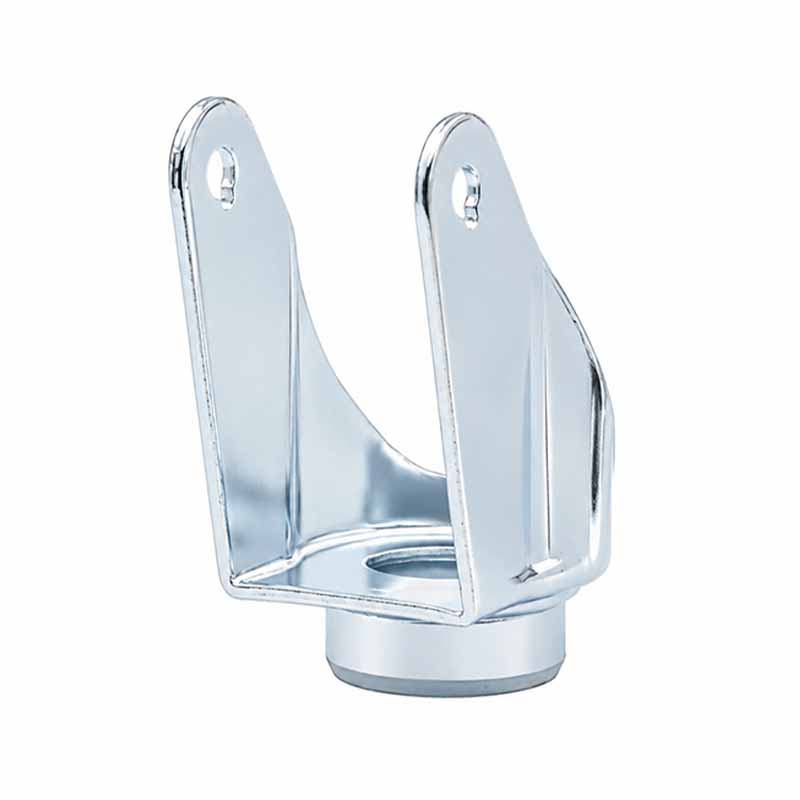 U-Shaped Carbon Steel Mounting Bracket with Zinc PlatingFeaturing high-strength carbon steel, a compact U-shape, and deburred edges, this zinc-plated bracket provides precise hole alignment for secure installation and stable load support in caster assemblies.View Product →
Selection Guidelines for Load-Bearing Caster Brackets
Specifying the right heavy-duty U-shaped carbon steel bracket starts with an honest estimate of the operating load. The load per caster is rarely a simple division of the total payload by the number of casters, because floors, frame stiffness, and turning dynamics redistribute weight. A practical approach is to calculate the maximum load on any single caster and then apply a safety factor that reflects the duty cycle and impact conditions. In practice, the key inputs are static load, dynamic load, and safety factor.
| Selection Parameter | What to Check | Risk If Ignored |
|---|---|---|
| Steel thickness | Matches the load rating | Bending and leg spread |
| Bend radius and channel width | Compatible with the wheel | Lateral rocking, axle overload |
| Bolt pattern and grade | Conforms to the mounting holes | Loosening, hole elongation |
| Zinc coating | Suitable for the environment | Corrosion, section loss, cracks |
| Dynamic rating | Matches shock and cycle loads | Fatigue fracture |
Because load failure in a caster is usually progressive, regular inspection is as important as initial selection. Check for paint cracking around bends, unusual wheel wear, and any play between the bracket and the axle. These are warning signs that the bracket is approaching its limit.
Lanyue's swivel caster components product family covers U-shaped brackets, fork assemblies, mounting plates, kingpins, step bolts, and other hardware needed to build or maintain reliable load-bearing caster systems.
Frequently Asked Questions
Q1: What is a heavy-duty U-shaped carbon steel caster bracket?
It is a load-bearing caster component with a U-shaped cross-section, made of carbon steel plate and usually zinc-plated. It connects the wheel axle to the equipment mounting surface, providing high bending and torsional rigidity.
Q2: What causes caster bracket load failure?
The main causes are overloading beyond the rated capacity, repeated shock loads, sharp bend radii that create stress concentration, corrosion that reduces material thickness, and loose mounting bolts that lead to hole elongation and progressive movement.
Q3: How much load can a heavy-duty U-shaped carbon steel bracket carry?
Capacity depends on steel thickness, channel width, bend quality, and manufacturing process. Heavy-duty industrial caster brackets are typically rated from several hundred kilograms to more than one thousand kilograms per caster. Always use the manufacturer's published rating and apply a safety factor for dynamic conditions.
Q4: Why choose zinc-plated carbon steel instead of stainless steel?
Carbon steel offers a better strength-to-cost ratio for heavy loads, while zinc plating provides economical corrosion protection. Stainless steel is preferred in washdown or highly corrosive environments, but zinc-plated carbon steel is the practical choice for general industrial duty.
Q5: Can a bent or cracked bracket be repaired and reused?
No. Bending means the material has already exceeded its yield strength, and cracks propagate under load. Replacing the bracket is safer and more economical than straightening or welding a weakened load-bearing part.
Conclusion
Load failure in caster brackets is rarely a sudden, random event. It is the result of geometry, material, manufacturing, and installation decisions that either protect the bracket or expose it to progressive damage. A heavy-duty U-shaped carbon steel caster bracket addresses all four areas: its U-section distributes stress across two legs, carbon steel provides predictable strength, zinc plating preserves the cross-section, and correct mounting keeps loads within safe limits. When your application demands reliable movement under load, specifying a well-made U-shaped carbon steel bracket is one of the most effective decisions you can make.
Related Products

PRODUCTS
Carbon Steel Fastenerss Rolling Bearings Heavy-Duty Steel Folding Trolleys Swivel Casters Bolt kitsContact
 1st Floor, Building 4, East Side, Jinger Road, Yuxin Town, Nanhu District, Jiaxing City, Zhejiang Province, China
 [email protected][email protected]
 +86-137 0583 8919+86-135 8638 0656
Copyright © Jiaxing Lanyue Metal Technology Co., Ltd. All Rights Reserved.
Privacy
Custom High-Performance Industrial Fasteners Manufacturers, Suppliers
