
 English
  Español
  Deutsch
 Home / News / Industry News / Guide Roller Selection: Materials, Load Ratings, Bearing Choices and Mounting Factors
-
 Lanyue Metal Technology
-
 [email protected]/[email protected]
-
 24 Hour Service - 7 Days a Week


Industry News
Home / News / Industry News / Guide Roller Selection: Materials, Load Ratings, Bearing Choices and Mounting Factors
Industry News
Sep 24,2026
Guide Roller Selection: Materials, Load Ratings, Bearing Choices and Mounting Factors
When a guide roller starts to drag on a rail, most operators blame the wheel surface. In many cases the real offender is hidden: the mounting hardware, the bearing clearance, or an internal bore tolerance that is a few hundredths of a millimetre off. A well-machined guide roller with a suitable bearing and correct mounting hardware can run for years with minimal maintenance, while an apparently identical roller with a sloppy fit will fail in weeks.
Content
What a guide roller actually does
A guide roller is a small component with a large responsibility. It keeps an assembly moving along a defined line, carrying its weight while limiting lateral play. The roller may look simple, but it brings together a wheel, a bearing, a shaft or hub, and often a mounting bracket. In a caster or a linear slide, the guide roller may also be part of a longer mechanism with a brake, a positioning pin, or a connecting rod.
Guide rollers can be flat, V-grooved, or flanged. A V-groove roller is used when the rail has a matching V profile, while a flanged roller prevents lateral displacement. The contact angle changes the load path and the side force that the bracket must absorb. For industrial users, this means that a guide roller should not be treated as a single commodity. It is an assembly where the metal component quality matters just as much as the bearing choice. A supplier that understands both the wheel body and its internal support parts can make a real difference in service life.
Selection factors that matter in practice
Four factors determine whether a guide roller will perform well: the wheel material, the load-bearing arrangement, the mounting hardware, and the environment. Start with the material, then verify the load, then check the bearing and the tolerances.
Wheel material and surface treatment
Zinc-plated carbon steel is a practical default for indoor machines and conveyor frames, because it is strong, relatively economical, and the zinc layer protects against moisture in ordinary industrial environments. Stainless steel becomes necessary in food, pharmaceutical, or outdoor corrosion-prone locations, but it costs more and is heavier. Engineering plastics such as nylon or polyurethane are quieter and lighter, yet they can soften under sustained heat or high load.
Hardness also matters. On a carbon steel roller, a case-hardened or induction-hardened tread resists grooving from abrasive particles. A hardened bearing seat keeps the bore round during the life of the part. In many guide rollers, a hard core is covered by a polyurethane or nylon ring. This material gives the roller a degree of compliance, which helps it absorb small misalignments. The trade-off is that too soft a tread can cause slip on a wet rail.
| Material | Typical benefit | Typical risk |
|---|---|---|
| Zinc-plated carbon steel | Strong, economical, corrosion-resistant for indoor use | Can pit if the coating is damaged |
| Stainless steel | Corrosion-resistant, hygienic, suited to wet environments | Higher cost, heavier than carbon steel |
| Engineering plastic | Quiet, light, no rust | Lower heat resistance, may deform under sustained load |
For a guide roller that has to work in a humid plant, a zinc-plated steel wheel with a removable bearing is usually the safest starting point. The mounting bracket, fork, and axle made from the same steel family help avoid galvanic corrosion at the contact points.
Load rating and bearing clearance
The second factor is the load that the guide roller will actually carry. It is not enough to read the rated capacity of the individual wheel. The roller axle, the bearing, and the bracket must all share the same margin. As a rule, total static load should be at least three times the combined weight of the moving parts, while dynamic load must account for accelerating, braking, and side forces. A small guide roller on a hand-operated scissor table may only see 50 kg, but if the table carries a heavy tool and gets tilted, the lateral force can double. The safest way is to use the dynamic load equation from the bearing manufacturer, then multiply by a service factor for shock loads.
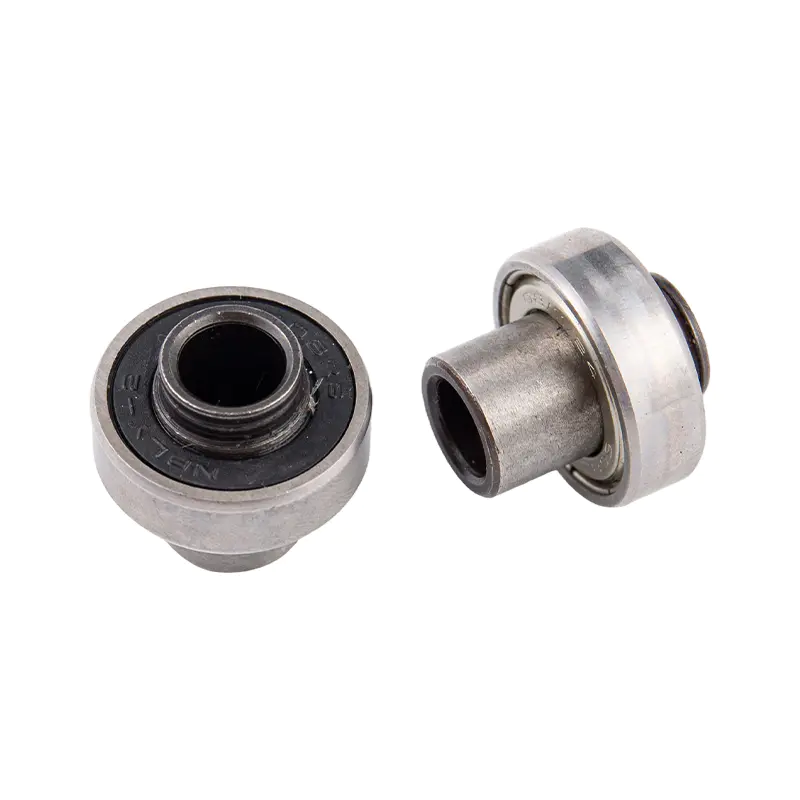
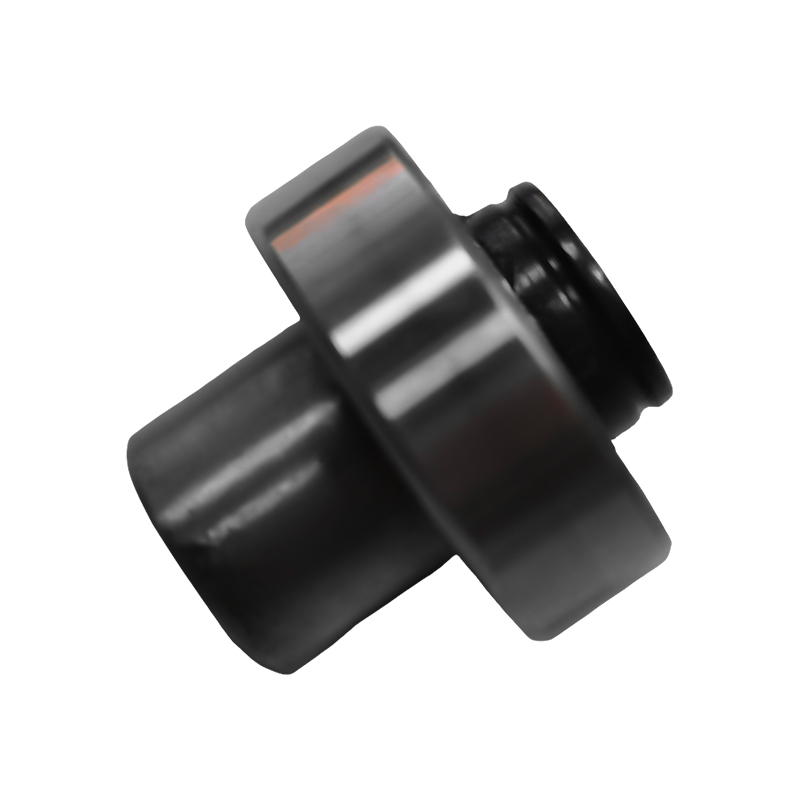
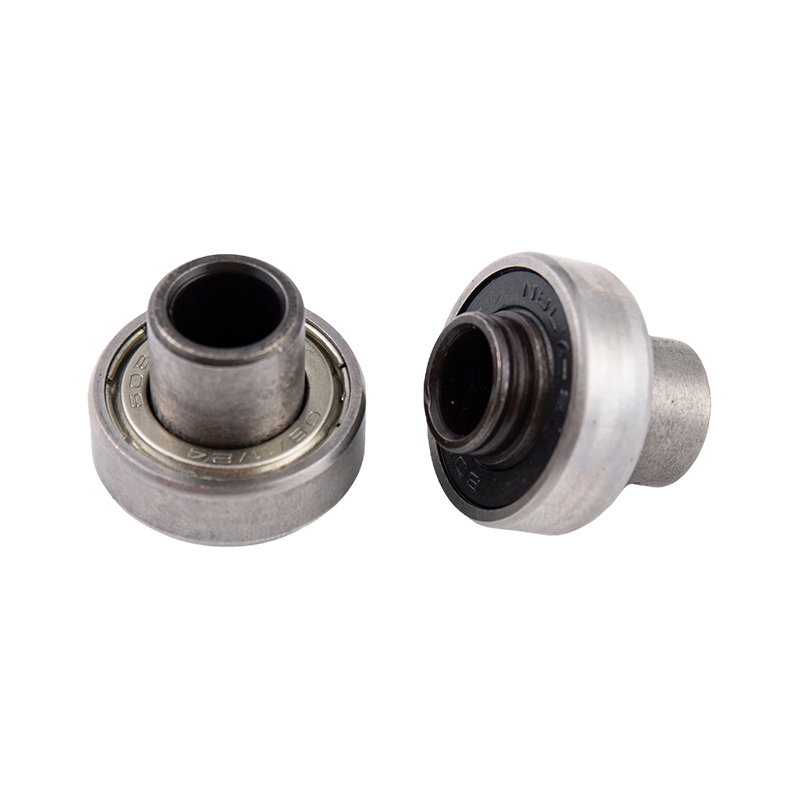 Integrated Bearing for Casters with 300 kg Load CapacityThis integrated bearing is designed for trolley and transport equipment, supporting up to 300 kg. Its precision construction ensures low rolling resistance and quiet operation, making it a reliable choice for high-load caster applications.View Product →
When a manufacturer integrates the bearing directly into the wheel, the load rating can be matched to a special design. Lanyue offers an integrated bearing that carries up to 300 kg and is used in trolley and transport equipment. For higher loads, a separate deep-groove ball bearing can be fitted into the roller hub with a controlled press fit.
Bearing type and bearing seat
Bearing internal clearance is just as important as load rating. A deep-groove ball bearing with the wrong radial clearance may feel smooth at room temperature but lock up when the frame expands from machine heat. For guide rollers that run in dusty or wet conditions, a sealed bearing should be specified instead of an open one. An RS sealing shield on a 608 bearing is common for cart wheels because it blocks dust, but overly tight seals can add drag. At higher rolling speeds, a low-friction contact seal is preferred.
 Deep Groove Ball Bearings for High-Speed and Low-Noise UseThis range of deep groove ball bearings (6200-6209) handles radial and some axial loads. With precision machining and high load capacity, they suit diverse applications from automotive to household appliances, ensuring efficiency and long service life.View Product →
For high-load applications, it can be useful to compare how bearing selection changes with axial and radial forces. A published rolling bearing guide explains the trade-offs in practice. You can use it as a reference when the roller load is less straightforward.
Mounting hardware and tolerances
The roller shaft and mounting plate determine how much side play develops over time. A stepped shaft machined to the correct shoulder diameter prevents the bearing from walking sideways. A connection pin with the right fit keeps the roller aligned with its track. These parts must be produced with consistent dimensions because a loose bore or a misaligned bracket produces flutter and premature wear.
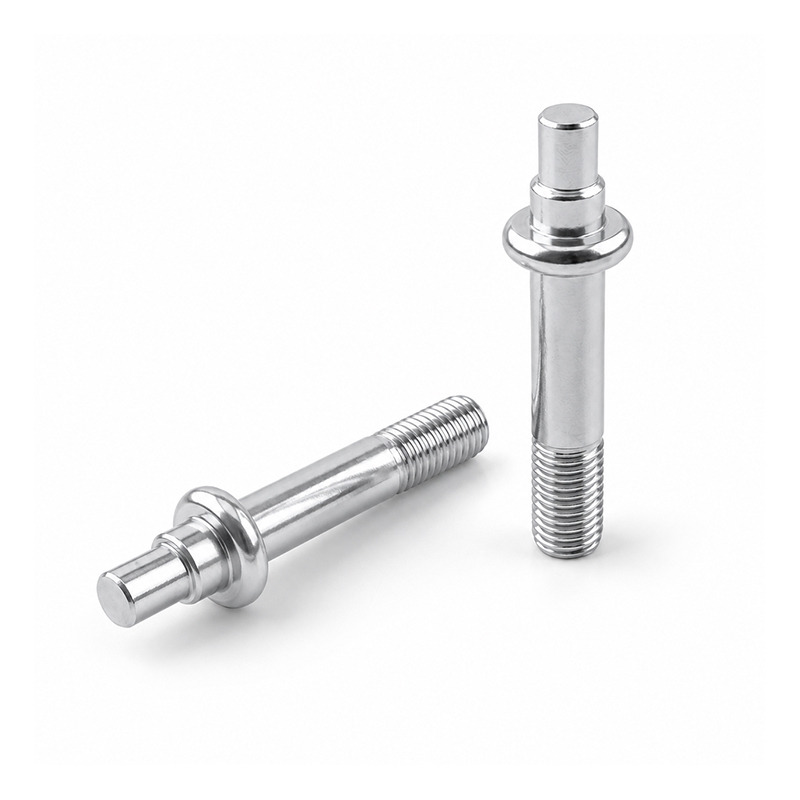 Zinc-Plated Carbon Steel Stepped Shaft for Caster AssemblyThis stepped shaft provides reliable support and positioning in caster assemblies. Its zinc plating reduces corrosion, while the threaded end and stepped design allow secure fastening and alignment, suitable for OEM production in various trolley types.View Product →
When you attach a guide roller, apply the mounting force gradually. A stepped shaft should be turned with a low interference fit, but not so tight that it cracks the bearing inner ring. A common mistake is to torque the mounting bolt until the bracket deforms. Lanyue Metal manufactures stepped shafts and connection pins in carbon steel with zinc plating, following the same tolerances used in caster assembly. This is part of its OEM production experience: components can be made from customer drawings or from a sample, with ISO 9001 quality control applied to small and large batches alike.
Practical checks before you install a guide roller
Before installation, check the bore diameter with a micrometer, inspect the bearing for play, and measure the mounting bracket width. A tolerance of 0.05 mm can be the difference between a quiet roller and a noisy one. If the roller is part of a braked caster or a positioning system, verify that the brake bracket and the positioning pin are aligned with the roller axis.
- Measure the axle diameter at three points to confirm roundness.
- Rotate the bearing by hand; it should turn freely without axial shake.
- Check the bracket width against the track or rail specification.
- Confirm that the coating covers edges and drilled holes to prevent rust.
- Verify that the bearing grease matches the operating temperature; standard lithium grease is suitable for most industrial guide rollers up to about 120 degrees C.
These checks take a few minutes, but they prevent the most common failures: bearing walk, side flutter, edge corrosion, and binding after thermal expansion.
A guide roller that works for years is made with precise machining, a matching bearing, and the right surface treatment. If you are sourcing a guide roller or a complete caster assembly, ask your supplier about material, load limit, and bore tolerances before you place the order. For OEM projects, drawings and samples can be turned into the specific roller components you need. Lanyue Metal supplies these parts with ISO 9001 quality control and flexible production, so the focus remains on the performance of your machine, not on replacement cycles.
Related Products

PRODUCTS
Carbon Steel Fastenerss Rolling Bearings Heavy-Duty Steel Folding Trolleys Swivel Casters Bolt kitsContact
 1st Floor, Building 4, East Side, Jinger Road, Yuxin Town, Nanhu District, Jiaxing City, Zhejiang Province, China
 [email protected][email protected]
 +86-137 0583 8919+86-135 8638 0656
Copyright © Jiaxing Lanyue Metal Technology Co., Ltd. All Rights Reserved.
Privacy
Custom High-Performance Industrial Fasteners Manufacturers, Suppliers
