-
 Lanyue Metal Technology
-
 [email protected]/[email protected]
-
 24 Hour Service - 7 Days a Week

 English
  Español
  Deutsch

Industry News
Industry News
Dec 10,2025
How to Choose the Right Carbon Steel Fasteners?
In the vast and interconnected world of industrial manufacturing and construction, few components are as fundamentally critical yet often overlooked as fasteners. Among them, Carbon Steel Fasteners form the undeniable backbone, holding together everything from massive skyscrapers and bridges to the automobiles we drive and the machinery that produces consumer goods. Their dominance is not accidental; it is the result of an unparalleled balance between high tensile strength, cost-effectiveness, and reliable performance across a broad spectrum of applications. However, the term "Carbon Steel Fasteners" is not a monolith. Selecting the wrong grade, coating, or specification can lead to catastrophic failure, costly downtime, and significant safety hazards. This comprehensive guide is designed to demystify the selection process, moving beyond a simple product catalog to provide a deep-dive into the engineering principles behind carbon steel fasteners. We will explore how understanding key attributes like grade markings, corrosion protection methods, material differences, and adherence to international standards is not just technical jargon—it is the essential knowledge required to make informed, reliable, and economical purchasing decisions that ensure structural integrity and longevity.
At Jiaxing Lanyue Metal Technology Co., Ltd., we leverage our position in the heart of the Yangtze River Delta's manufacturing hub to not only produce a wide range of these critical components but also to empower our global industrial customers with the knowledge to select them correctly. Our commitment, backed by a rigorous ISO 9001 quality management system, is to provide more than just parts; we provide solutions built on expertise and reliability.
Content
- 1 Chapter 1: Decoding Strength – Understanding Carbon Steel Fastener Grades
- 2 Chapter 2: The Armor – Corrosion Protection Coatings for Longevity
- 3 Chapter 3: Material Matters – Carbon Steel vs. The Alternatives
- 4
- 5 Chapter 4: Following the Code – Key Specifications for Critical Applications
- 6 Chapter 5: Your Selection Checklist: 5 Questions to Ask Before Buying
- 7 Conclusion: Investing in the Right Fastener Saves More Than Cost
- 8 FAQ
- 8.1 What is the difference between Grade 5 and Grade 8 bolts, and can I substitute one for the other?
- 8.2 How long will hot-dip galvanized bolts last outdoors?
- 8.3 Why are some high-strength bolts (like Grade 12.9) considered more prone to "hydrogen embrittlement"?
- 8.4 When should I use a black oxide fastener versus a zinc-plated one?
- 8.5 What does the "A325" designation on a structural bolt actually guarantee?
Chapter 1: Decoding Strength – Understanding Carbon Steel Fastener Grades
The selection process for any Carbon Steel Fasteners begins with a fundamental question: How strong does it need to be? Strength is not a vague concept but a precisely measurable set of mechanical properties, most commonly communicated through a grade marking system. This system, such as the ISO metric or SAE grades, provides an immediate, coded understanding of the fastener's performance capabilities. For instance, a very common and widely specified grade is high tensile carbon steel fasteners grade 8.8. In this designation, the first number (8) multiplied by 100 indicates the minimum tensile strength in MPa (8 x 100 = 800 MPa). The second number (8), when expressed as a percentage of the first (0.8), indicates the yield strength ratio (800 MPa * 0.8 = 640 MPa). Yield strength is arguably more critical than ultimate tensile strength, as it defines the stress point at which the material begins to deform plastically and will not return to its original shape. Therefore, an 8.8 grade bolt offers a minimum tensile strength of 800 MPa and a yield strength of 640 MPa, making it suitable for general structural and automotive applications where high reliability is needed without the extreme strength (and associated cost and brittleness) of higher grades. Understanding this alphanumeric code is the first step in matching the fastener to the application's load requirements, safety factors, and design parameters, ensuring the assembly performs as intended under both static and dynamic loads.
- Grade 4.6: A low-carbon steel grade with moderate strength. Ideal for non-critical applications where high ductility is valued over sheer strength.
- Grade 10.9: A high-strength grade, often alloyed and heat-treated. Used in demanding automotive and machinery applications where weight savings and high clamp force are crucial.
- Grade 12.9: An ultra-high-strength grade. Offers the highest strength but requires careful handling due to increased susceptibility to hydrogen embrittlement.
| Grade | Material | Min. Tensile Strength (MPa) | Min. Yield Strength (MPa) | Typical Applications |
| 4.6 | Low/Medium Carbon Steel | 400 | 240 | General purpose, low-stress assemblies, fixtures. |
| 8.8 | Medium Carbon Steel (Quenched & Tempered) | 800 | 640 | General engineering, structural steelwork, automotive chassis. |
| 10.9 | Medium Carbon Steel, Alloy Steel (Q&T) | 1000 | 900 | High-performance engines, critical machinery, heavy-duty connections. |
| 12.9 | Alloy Steel (Q&T) | 1200 | 1080 | Aerospace, precision equipment, high-pressure valve flanges. |
Chapter 2: The Armor – Corrosion Protection Coatings for Longevity
While carbon steel provides excellent strength, its Achilles' heel is corrosion (rust) when exposed to moisture and oxygen. In many environments, an unprotected carbon steel fastener will weaken and fail long before its mechanical load capacity is ever reached. Therefore, selecting an appropriate protective coating is not an optional extra; it is an integral part of the fastener specification that directly dictates service life. The choice of coating depends entirely on the severity of the operating environment—from dry, indoor climates to harsh industrial or marine settings. For extreme outdoor exposure, such as in bridges, utility towers, or coastal structures, hot dipped galvanized carbon steel bolts are often the standard specification. The hot-dip galvanizing (HDG) process involves immersing cleaned steel components into a bath of molten zinc, resulting in a thick, metallurgically bonded coating that provides both barrier and sacrificial (cathodic) protection. Even if the coating is scratched, the zinc sacrificially corrodes to protect the underlying steel. This makes HDG one of the most durable and long-lasting corrosion protection methods available for fasteners.
In contrast, for indoor or controlled environments where corrosion resistance is needed more for aesthetics and a basic barrier against occasional condensation, a black oxide finished carbon steel screws might be the optimal choice. The black oxide process converts the surface of the steel to magnetite (Fe3O4), creating a sleek black finish that minimizes light reflection and provides a mild corrosion resistance. Its key advantages are its low cost, the fact that it adds virtually no dimension to the part (critical for precision assemblies), and the matte black appearance is often desirable. However, it offers minimal protection in wet environments and is frequently supplemented with a light oil or wax sealant.
- Electroplated Zinc (Zinc Plating): A thinner, more economical coating suitable for indoor use. Often comes with a blue, clear, or yellow chromate passivation top layer for enhanced corrosion resistance and color coding.
- Mechanical Galvanizing: Provides a zinc coating similar to electroplating but applied via a cold, tumbling process, resulting in a thicker, more uniform coating on threaded parts without risk of hydrogen embrittlement.
- Dacromet/Geomet: Inorganic zinc-flake coatings offering excellent corrosion resistance without hydrogen embrittlement. They provide a silver-gray finish and are commonly used in automotive applications.
Chapter 3: Material Matters – Carbon Steel vs. The Alternatives
A fundamental step in the material selection process is understanding the clear carbon steel vs alloy steel fasteners difference. While both are ferrous metals, their composition and resulting properties set them apart for specific duties. Standard carbon steel fasteners are primarily an alloy of iron and carbon, with trace amounts of other elements. Their properties are largely determined by the carbon content and heat treatment. They offer an outstanding balance of strength, ductility, and affordability, making them suitable for the vast majority of general industrial applications. When the design calls for higher strength, such as in Grade 10.9 or 12.9 fasteners, small amounts of alloying elements like chromium, molybdenum, or vanadium are intentionally added to create alloy steel. These elements enhance hardenability, allowing the steel to achieve higher strength and toughness through heat treatment. They also can improve wear resistance and performance at elevated temperatures.
The key distinction lies in performance under stress. For a critical, high-stress dynamic joint in a piece of heavy machinery, an alloy steel fastener (like a Grade 10.9) would be specified to handle the high clamp loads and fatigue stresses. For a static, non-critical assembly like a furniture bracket, a standard carbon steel fastener (like a Grade 4.6 or 8.8) is perfectly adequate and more cost-effective. It is also crucial to consider stainless steel, which is chosen almost exclusively for its superior corrosion resistance in harsh environments, albeit at a higher cost and often with slightly lower strength than comparable high-grade alloy steels.
| Material Type | Key Composition | Primary Advantage | Primary Limitation | Best For |
| Carbon Steel | Iron, Carbon (Low to High %) | Optimal cost-to-strength ratio, wide availability. | Prone to corrosion without coating. | Vast majority of general industrial and construction applications with appropriate coating. |
| Alloy Steel | Carbon Steel + Cr, Mo, V, etc. | Higher strength, toughness, and wear resistance. | Higher cost, may be more brittle. | High-stress dynamic applications (engine parts, heavy machinery). |
| Stainless Steel | Iron, Chromium (>10.5%), Nickel | Excellent corrosion resistance, no coating needed. | Higher cost, potential for galling, lower strength than high-grade alloy steel. | Harsh environments (chemical, marine, food processing), aesthetic applications. |
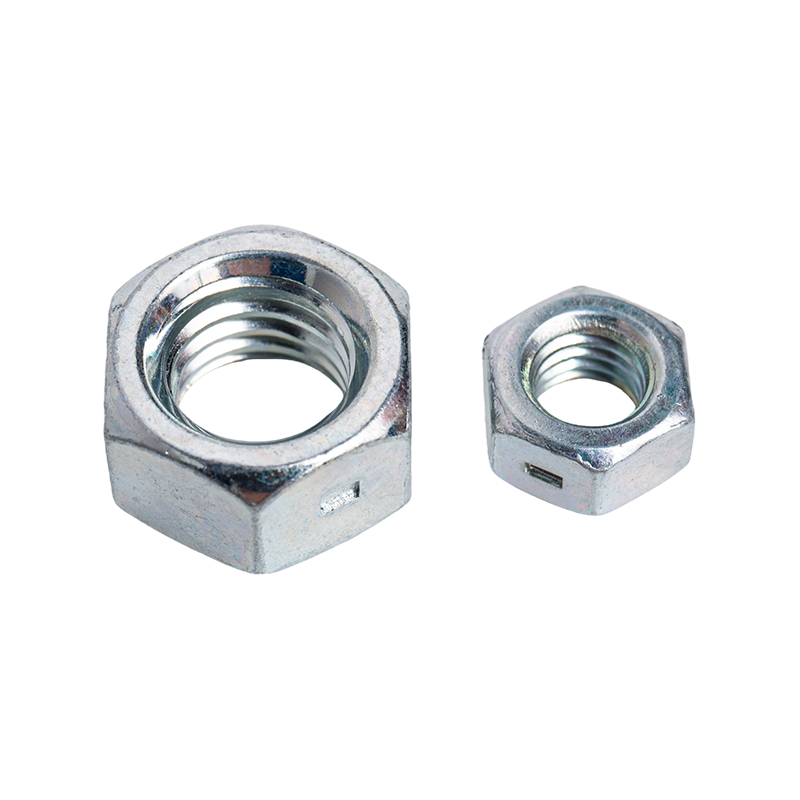
Chapter 4: Following the Code – Key Specifications for Critical Applications
Beyond material and grade, many critical applications are governed by stringent industry standards and specifications. These documents, published by organizations like ASTM International, SAE, and ISO, provide precise requirements for dimensions, mechanical properties, chemical composition, testing methods, and even installation procedures. Adherence to these standards is non-negotiable in fields like structural engineering, aerospace, and pressure vessel construction, as they ensure consistency, interoperability, and most importantly, safety. A paramount example in construction is the ASTM A325 carbon steel structural bolts specification. ASTM A325 bolts are heavy hex structural bolts made from medium carbon steel, quenched and tempered to achieve a tensile strength equivalent to ISO Grade 8.8 or higher. This standard meticulously defines everything from the bolt's head dimensions and thread length to its mandatory mechanical testing requirements and proper installation using a calibrated wrench to achieve a specified preload (tension).
These bolts are designed specifically for splicing and connecting structural steel members in buildings, bridges, and other frameworks where joints are subject to shear and tension. Using a non-standard bolt in such an application could compromise the entire structure's integrity. Other vital standards include SAE J429 for inch-series bolts and ISO 898-1 for metric mechanical properties. At Jiaxing Lanyue Metal Technology, our production and quality assurance processes are aligned with these international benchmarks, ensuring that fasteners specified for critical applications meet the exacting demands of the relevant code, providing engineers and builders with confidence in every connection.
- ASTM A193: Standard for alloy-steel and stainless steel bolting materials for high-temperature or high-pressure service.
- ASTM A307: Standard for carbon steel bolts and studs with tensile strength of 60,000 psi, used for general purpose applications.
- ISO 4014/4017:International standards for hex head bolts and screws, specifying dimensions and property classes.
Chapter 5: Your Selection Checklist: 5 Questions to Ask Before Buying
Armed with the knowledge from the previous chapters, you can now systematically approach any Carbon Steel Fasteners procurement decision. To translate theory into practice, use this actionable checklist to guide conversations with suppliers and ensure you specify the correct component for the job.
- 1. What are the mechanical load requirements? Determine if the joint is in shear, tension, or both. Calculate the required clamp force and apply appropriate safety factors. This will directly point you to the necessary property class (e.g., 8.8, 10.9).
- 2. What is the operating environment? Assess exposure to moisture, chemicals, salt spray, and temperature extremes. This dictates the corrosion protection system, from basic black oxide for dry interiors to hot-dip galvanizing for harsh outdoors.
- 3. Are there governing industry standards or codes? Check project specifications or regulatory requirements. In structural steelwork, for example, ASTM A325 or its equivalent may be legally mandated.
- 4. What are the installation and maintenance considerations? Consider tool access, required torque, and the possibility of future disassembly. Some coatings affect friction and torque-tension relationships.
- 5. Does the supplier provide full material certification and traceability? For critical applications, insist on certified test reports (e.g., 3.1 Material Certificates per EN 10204) that trace the batch to its mill test reports, guaranteeing the material's pedigree and properties.
Conclusion: Investing in the Right Fastener Saves More Than Cost
Selecting the appropriate Carbon Steel Fasteners is an exercise in applied engineering, not a simple clerical task. It requires a synthesized understanding of strength grades like high tensile carbon steel fasteners grade 8.8, the protective science behind coatings from hot dipped galvanized carbon steel bolts to black oxide finished carbon steel screws, the material science clarifying the carbon steel vs alloy steel fasteners difference, and the non-negotiable compliance with standards like the ASTM A325 carbon steel structural bolts specification. This knowledge empowers you to make decisions that optimize for safety, longevity, and total cost of ownership. A correctly specified fastener may have a slightly higher upfront cost but will prevent catastrophic failures, expensive repairs, and operational downtime, delivering immense value over the lifecycle of the assembly. As a dedicated partner in precision manufacturing, Jiaxing Lanyue Metal Technology Co., Ltd. is committed to supporting this decision-making process by providing not only high-quality, certified fasteners but also the technical expertise to help you select with confidence, ensuring every connection you make is a secure and lasting one.
FAQ
What is the difference between Grade 5 and Grade 8 bolts, and can I substitute one for the other?
Grade 5 and Grade 8 are SAE (Society of Automotive Engineers) specifications for inch-series bolts, roughly analogous to ISO property classes 8.8 and 10.9 respectively. The core difference is strength. A Grade 8 bolt has a minimum tensile strength of 150,000 psi, while a Grade 5 is 120,000 psi. More importantly, Grade 8 has a higher proof load (the load at which it takes permanent set) and is made from medium carbon alloy steel and heat-treated. They are not generally interchangeable. Substituting a lower-grade bolt where a Grade 8 is specified can lead to bolt stretching, joint loosening, or shear failure under load. Conversely, using a higher-grade bolt where not needed is an unnecessary expense and, in some cases, the increased hardness can make Grade 8 bolts more brittle and susceptible to sudden fracture under dynamic loads. Always follow the engineer's or original equipment manufacturer's specification.
How long will hot-dip galvanized bolts last outdoors?
The service life of hot dipped galvanized carbon steel bolts outdoors is not a fixed number but depends on the local atmospheric corrosivity. A key determining factor is the thickness of the zinc coating, which is measured in mils or microns. In a typical rural environment with low pollution, a standard HDG coating can protect the underlying steel for 50 years or more. In a moderate industrial or coastal environment, that life may be reduced to 20-30 years. In severe marine splash zones, it will be less. The zinc corrodes sacrificially at a predictable rate, so a thicker coating directly translates to a longer lifespan. It's also important to note that the protection is electrochemical; even if the coating is scratched, the surrounding zinc will protect the exposed steel.
Why are some high-strength bolts (like Grade 12.9) considered more prone to "hydrogen embrittlement"?
Hydrogen embrittlement is a time-delayed, brittle failure mode that can affect very high-strength steels, typically those with tensile strengths above 1000 MPa (like Grade 10.9 and especially 12.9). During manufacturing processes like electroplating or pickling, atomic hydrogen can diffuse into the steel. Under the high tensile stress of being tightened, this hydrogen migrates to areas of high stress concentration (like the thread roots), where it recombines into molecular hydrogen, creating immense internal pressure that can initiate micro-cracks and cause sudden, catastrophic fracture days or weeks after installation. This is why for high tensile carbon steel fasteners of these grades, careful process control, post-plating baking (to drive out hydrogen), and proper torque management are absolutely critical. Alternative coatings like mechanical galvanizing or Dacromet, which do not introduce hydrogen, are often specified for these high-strength applications.
When should I use a black oxide fastener versus a zinc-plated one?
The choice between black oxide finished carbon steel screws and zinc-plated screws hinges on the need for corrosion resistance versus dimensional precision and appearance. Use Black Oxide when: the environment is primarily dry/indoor; you need a coating that adds negligible thickness for tight-tolerance fits; you want a non-reflective, dark aesthetic; and cost is a primary driver. Use Zinc Plating (electroplated) when: moderate corrosion resistance for occasional dampness is needed (it's better than black oxide); color coding (via different chromates) is useful; and you are not dealing with very high-strength bolts where the plating process risks hydrogen embrittlement. For harsh environments, neither is sufficient, and hot-dip galvanizing or more advanced coatings should be considered.
What does the "A325" designation on a structural bolt actually guarantee?
The marking "A325" on the head of a bolt signifies that the manufacturer certifies the product conforms to the comprehensive requirements of the ASTM A325 carbon steel structural bolts specification. This guarantee covers multiple, strictly defined aspects: Material: It is made from specific medium carbon or alloy steel. Mechanical Properties: It meets minimum tensile and yield strength, hardness, and ductility requirements. Dimensions: It conforms to standard heavy hex head and thread dimensions. Performance: It is designed to be installed to a calibrated preload (tension) to properly clamp structural members together. Using an A325 bolt ensures predictability and safety in structural connections, as the entire system—from the bolt itself to the connected members and nuts—is designed around these certified performance characteristics. It is a mark of reliability for life-safety-critical applications.
Related Products


PRODUCTS
Carbon Steel Fastenerss Rolling Bearings Heavy-Duty Steel Folding Trolleys Swivel Casters Bolt kitsContact
 1st Floor, Building 4, East Side, Jinger Road, Yuxin Town, Nanhu District, Jiaxing City, Zhejiang Province, China
 [email protected][email protected]
 +86-137 0583 8919+86-135 8638 0656
Copyright © Jiaxing Lanyue Metal Technology Co., Ltd. All Rights Reserved.
Privacy
Custom High-Performance Industrial Fasteners Manufacturers, Suppliers
