-
 Lanyue Metal Technology
-
 [email protected]/[email protected]
-
 24 Hour Service - 7 Days a Week

 English
  Español
  Deutsch

Industry News
Industry News
Mar 16,2026
Rolling Bearing & Deep Groove Ball Bearings: Complete Guide
Rolling bearings are the most widely used mechanical components for supporting rotating shafts and reducing friction in machinery — and deep groove ball bearings are the single most common type within that category, accounting for the majority of global bearing production. For applications where standard catalog sizes do not fit, non-standard accessories bearings provide custom-dimensioned or specially configured solutions. Understanding the differences between bearing types, their load capacities, speed ratings, and when non-standard variants are necessary gives engineers and procurement teams a practical framework for specification and sourcing.
Content
- 1 What Rolling Bearings Are and How They Work
- 2 Deep Groove Ball Bearings: Design, Capabilities, and Variants
- 3 Deep Groove Ball Bearing Specifications: Key Parameters Explained
- 4 Non-Standard Accessories Bearings: When Catalog Sizes Are Not Enough
- 5 Comparing Deep Groove Ball Bearings with Other Rolling Bearing Types
- 6 Lubrication and Maintenance of Rolling Bearings
- 7 Selecting the Right Rolling Bearing for Your Application
What Rolling Bearings Are and How They Work
A rolling bearing supports a rotating shaft by replacing sliding friction with rolling friction between the shaft and its housing. The bearing consists of four essential elements: an inner ring (bore), an outer ring (OD), rolling elements (balls, rollers, or needles), and a cage or retainer that keeps the rolling elements evenly spaced.
Rolling contact reduces friction coefficients dramatically compared to plain sleeve bearings. A typical rolling bearing has a friction coefficient of 0.001 to 0.003, compared to 0.05 to 0.15 for a lubricated plain bearing. This reduction in friction directly translates into lower operating temperatures, reduced energy consumption, and longer service life — which is why rolling bearings are found in virtually every rotating machine from electric motors and gearboxes to automotive wheels and aerospace turbines.
Main Categories of Rolling Bearings
- Ball bearings: Use spherical rolling elements; best for high-speed applications with moderate radial and axial loads. Subtypes include deep groove, angular contact, self-aligning, and thrust ball bearings.
- Roller bearings: Use cylindrical, tapered, spherical, or needle-shaped rolling elements; carry higher radial loads than equivalent-sized ball bearings. Subtypes include cylindrical roller, tapered roller, spherical roller, and needle roller bearings.
- Thrust bearings: Designed primarily for axial (thrust) loads; available in ball thrust, roller thrust, and tapered roller thrust configurations.
Deep Groove Ball Bearings: Design, Capabilities, and Variants
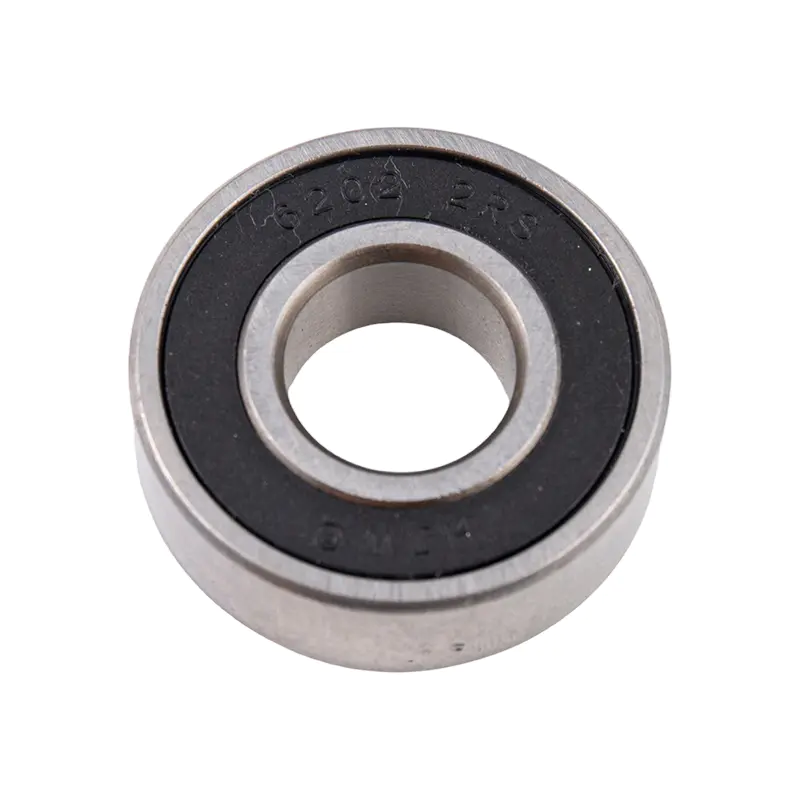
Deep groove ball bearings (DGBB) are the foundational bearing type — simple in construction, versatile in application, and manufactured in the widest range of sizes of any rolling bearing. Their defining feature is a deep, uninterrupted raceway groove in both the inner and outer rings, which allows the balls to carry both radial loads and moderate axial loads in either direction without requiring separate thrust arrangements.
Construction and Geometry
The raceway groove radius in a deep groove ball bearing is typically 51.5% to 53% of the ball diameter — slightly larger than the ball to allow free rolling while maintaining a conforming contact that distributes load efficiently. This geometry enables the bearing to sustain axial loads up to approximately 70% of its radial load capacity in static conditions, which distinguishes deep groove ball bearings from shallower-groove designs.
Standard deep groove ball bearings follow ISO 15 and ISO 355 dimensional standards. The most common series are the 6000, 6200, 6300, and 6400 metric series, covering bore diameters from 3mm (6700 series) up to 320mm (6064) in standard catalog ranges.
Sealing and Shielding Options
Deep groove ball bearings are available in open, shielded (Z or ZZ), and sealed (RS or 2RS) configurations:
- Open (no suffix): No sealing; requires external lubrication. Used where the bearing is in a lubricated housing with frequent oil changes, such as gearboxes.
- Shielded (Z / ZZ): Metal shields on one or both sides prevent gross contamination but do not contact the inner ring, so friction is minimal. Suitable for moderately clean, high-speed applications such as electric motors.
- Sealed (RS / 2RS): Rubber contact seals on one or both sides provide full protection against dust, moisture, and contaminants. Pre-greased for life — no external lubrication required. Widely used in household appliances, pumps, and agricultural equipment.
Speed and Load Performance
Deep groove ball bearings offer the highest speed ratings of any rolling bearing type for a given bore size. A 6206 bearing (30mm bore) has a reference speed of approximately 13,000 rpm in grease lubrication and 17,000 rpm with oil lubrication. By comparison, a comparable cylindrical roller bearing NJ206 is limited to around 10,000 rpm. This high-speed capability makes DGBB the default choice for electric motors, turbines, dental drills, and high-speed spindles.
Deep Groove Ball Bearing Specifications: Key Parameters Explained
| Bearing No. | Bore (d) | OD (D) | Width (B) | Dynamic Load (C) | Ref. Speed (Grease) |
|---|---|---|---|---|---|
| 6004 | 20mm | 42mm | 12mm | 9.36 kN | 18,000 rpm |
| 6206 | 30mm | 62mm | 16mm | 19.5 kN | 13,000 rpm |
| 6308 | 40mm | 90mm | 23mm | 41.0 kN | 9,000 rpm |
| 6312 | 60mm | 130mm | 31mm | 81.9 kN | 6,700 rpm |
| 6020 | 100mm | 150mm | 24mm | 47.5 kN | 4,800 rpm |
The dynamic load rating (C) is the most critical performance number — it represents the constant radial load under which a group of identical bearings will achieve a basic rating life of one million revolutions (L10 life). Using the bearing life equation L10 = (C/P)³ × 10⁶ revolutions (where P is the equivalent dynamic bearing load), engineers can calculate expected service life for any given load condition.
Non-Standard Accessories Bearings: When Catalog Sizes Are Not Enough
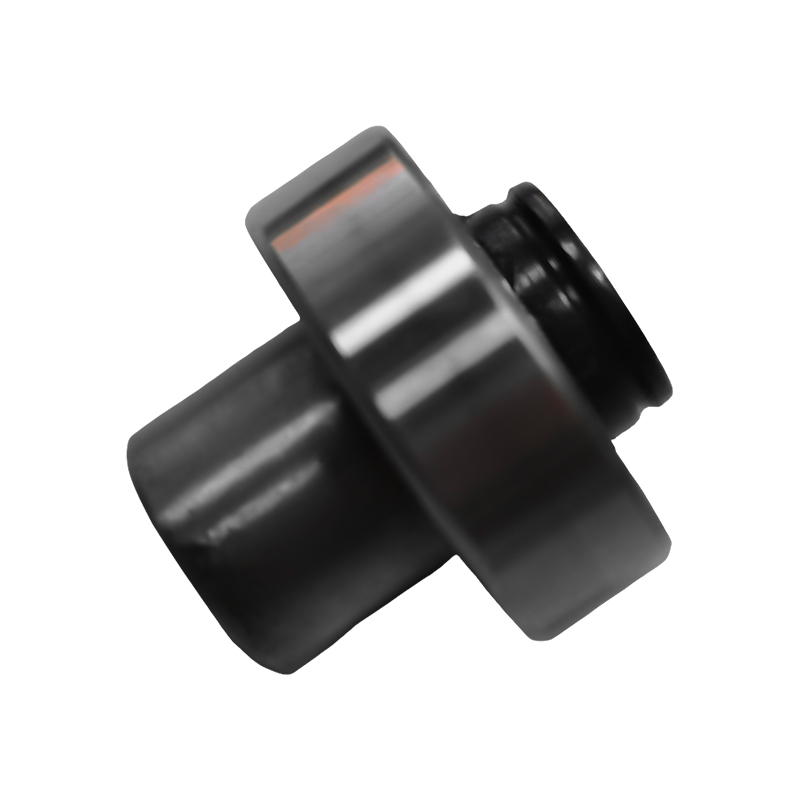
Non-standard accessories bearings refer to rolling bearings — including deep groove ball bearing variants — that deviate from ISO standard dimensions, feature special material specifications, modified internal geometries, or are combined with integrated accessories such as flanges, extended inner rings, snap ring grooves, or special seals. They are manufactured to order when standard catalog bearings cannot satisfy the dimensional, performance, or interface constraints of the application.
Common Non-Standard Configurations
- Flanged outer ring bearings (suffix F or FF): A radial flange machined on the outside diameter of the outer ring allows direct axial location in a housing without a separate shoulder or snap ring. Widely used in conveyor systems, food processing equipment, and linear motion assemblies where axial positioning must be precise and housing machining is to be minimized.
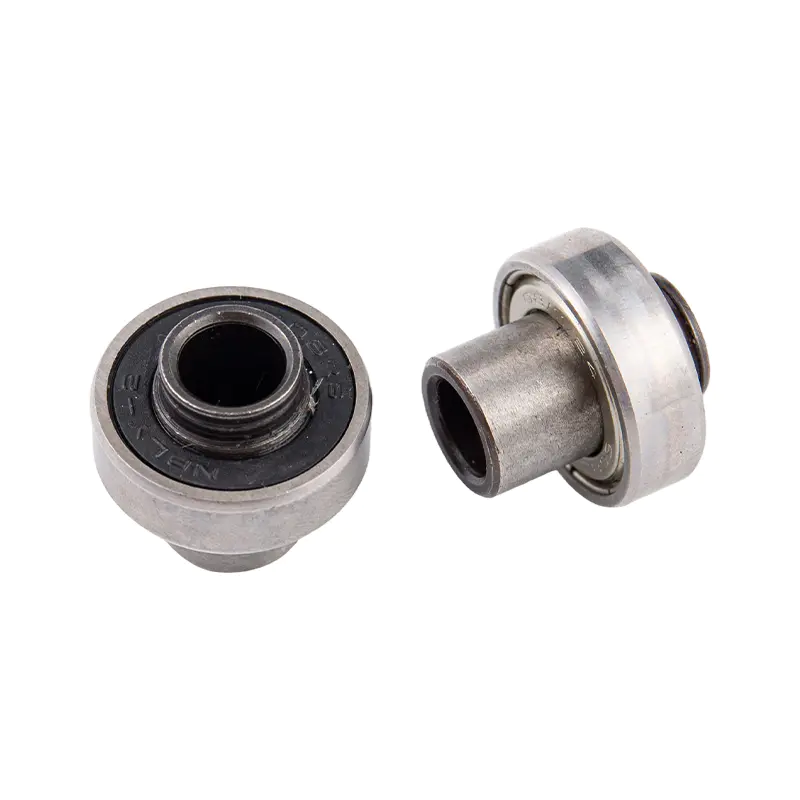
- Extended inner ring bearings: The inner ring is wider than the outer ring, allowing a longer shaft engagement or direct mounting of pulleys, sprockets, or gears. Common in agricultural machinery and conveyor drives where standard inner ring widths are insufficient for clamping or locking.
- Snap ring groove bearings (suffix N or NR): A circumferential groove machined into the outer ring OD accepts a snap ring for positive axial location. The NR variant includes the snap ring. Used in automotive transmissions and gearboxes where snap ring retention replaces machined housing shoulders.
- Non-standard bore and OD dimensions: When shaft or housing dimensions are set by legacy designs, casting constraints, or inch-metric conversion challenges, bearings are manufactured with bores such as 15.875mm (5/8 inch) or ODs that fall between standard metric series to fit existing hardware without redesign.
- Special material bearings: Stainless steel (AISI 440C or 316) inner and outer rings for corrosive environments such as food processing, marine applications, or medical equipment. Ceramic ball variants (Si₃N₄ or ZrO₂ balls in steel rings — hybrid bearings) for electrical insulation, ultra-high speed, or vacuum environments.
- Special clearance or preload grades: Standard bearings are manufactured to C3 (greater than normal) or C2 (less than normal) internal clearance designations. Non-standard applications — such as precision spindles or cryogenic machinery — may require custom clearance values specified in microns.
- High-temperature or low-temperature grease fills: Standard pre-greased sealed bearings are filled with lithium-based grease rated to approximately 120°C. Non-standard accessories bearings can be supplied with PTFE-thickened grease for up to 260°C, or with low-temperature synthetic grease for operation down to -60°C.
When to Specify a Non-Standard Accessories Bearing
Non-standard bearings add cost and lead time — minimum order quantities from specialist manufacturers often start at 50 to 200 pieces, and tooling or setup charges may apply for very small volumes. They are justified when:
- Redesigning the shaft or housing to accept a standard bearing would cost more than the bearing premium across the production volume.
- The operating environment (temperature, corrosion, electrical conductivity, vacuum) eliminates all standard catalog options.
- An integrated accessory feature (flange, snap ring groove, extended ring) simplifies assembly and reduces total part count in the assembly.
- The application is a direct replacement for an obsolete bearing in existing machinery where shaft and housing dimensions cannot be changed.
Comparing Deep Groove Ball Bearings with Other Rolling Bearing Types
| Bearing Type | Radial Load | Axial Load | Speed | Misalignment | Typical Use |
|---|---|---|---|---|---|
| Deep Groove Ball | Medium | Moderate (both directions) | Very High | Low | Electric motors, pumps, instruments |
| Angular Contact Ball | Medium-High | High (one direction) | High | Very Low | Machine tool spindles, gearboxes |
| Cylindrical Roller | High | Low (limited) | High | Very Low | Heavy motors, rolling mills |
| Tapered Roller | High | High (one direction) | Medium | Very Low | Automotive wheel hubs, gearboxes |
| Spherical Roller | Very High | Medium | Medium | High (self-aligning) | Mining, paper mills, conveyors |
| Needle Roller | High | Very Low | Medium | Very Low | Automotive transmissions, robotics |
Lubrication and Maintenance of Rolling Bearings
Proper lubrication is the single most important factor in achieving the rated service life of any rolling bearing. Approximately 36% of premature bearing failures are caused by inadequate or incorrect lubrication according to major bearing manufacturers' field failure analysis data.
Grease vs Oil Lubrication
- Grease lubrication is used in the majority of applications — it is easy to retain in the bearing, provides corrosion protection, and requires no oil circulation system. The grease fill volume should be 30% to 50% of the free space in the bearing and housing cavity; overfilling causes churning, heat buildup, and accelerated degradation.
- Oil lubrication is used in high-speed, high-temperature, or heavily loaded applications where continuous heat removal and fresh lubricant supply are needed. Circulating oil systems allow filtration and monitoring of contamination levels — a significant advantage in critical machinery.
Relubrication Intervals
For open or shielded deep groove ball bearings in grease-lubricated housings, relubrication intervals can be calculated using bearing manufacturer formulas that account for bearing size, speed, operating temperature, and load. As a practical example: a 6310 bearing (50mm bore) running at 1,500 rpm at 70°C under normal load has a recommended relubrication interval of approximately 3,000 to 5,000 operating hours. At 90°C, that interval halves — a reminder that every 15°C rise in operating temperature roughly doubles grease degradation rate.
Selecting the Right Rolling Bearing for Your Application
Use this decision framework when specifying a bearing:
- Define the load type and magnitude: Is the load primarily radial, axial, or combined? Calculate the equivalent dynamic load P using the bearing manufacturer's X and Y load factors for combined loading.
- Determine the required life: Use L10 life calculations to confirm the bearing's dynamic load rating C is sufficient for your required service hours at the design load and speed.
- Confirm speed capability: Verify the bearing's reference speed (grease) or limiting speed (oil) exceeds your operating speed — with a margin of at least 20% for continuous operation.
- Assess environmental conditions: Temperature range, moisture, dust, chemicals, and electrical requirements determine whether standard steel, stainless steel, ceramic hybrid, or specially sealed variants are needed.
- Check dimensional fit: Confirm bore, OD, and width match the shaft and housing dimensions. If they do not, evaluate whether a non-standard accessories bearing is more cost-effective than redesigning the surrounding structure.
- Specify fits and tolerances: Rotating inner ring applications require an interference fit on the shaft (typically k5 or m5 tolerance). Stationary outer rings use a transition or clearance fit in the housing (typically H7 or J7).
Related Products

PRODUCTS
Carbon Steel Fastenerss Rolling Bearings Heavy-Duty Steel Folding Trolleys Swivel Casters Bolt kitsContact
 1st Floor, Building 4, East Side, Jinger Road, Yuxin Town, Nanhu District, Jiaxing City, Zhejiang Province, China
 [email protected][email protected]
 +86-137 0583 8919+86-135 8638 0656
Copyright © Jiaxing Lanyue Metal Technology Co., Ltd. All Rights Reserved.
Privacy
Custom High-Performance Industrial Fasteners Manufacturers, Suppliers
