-
 Lanyue Metal Technology
-
 [email protected]/[email protected]
-
 24 Hour Service - 7 Days a Week

 English
  Español
  Deutsch

Industry News
Industry News
May 08,2026
Screw Nut Sides, Tightening Direction & Tools for Nuts and Bolts
Content
How Many Sides Does a Screw Nut Have?
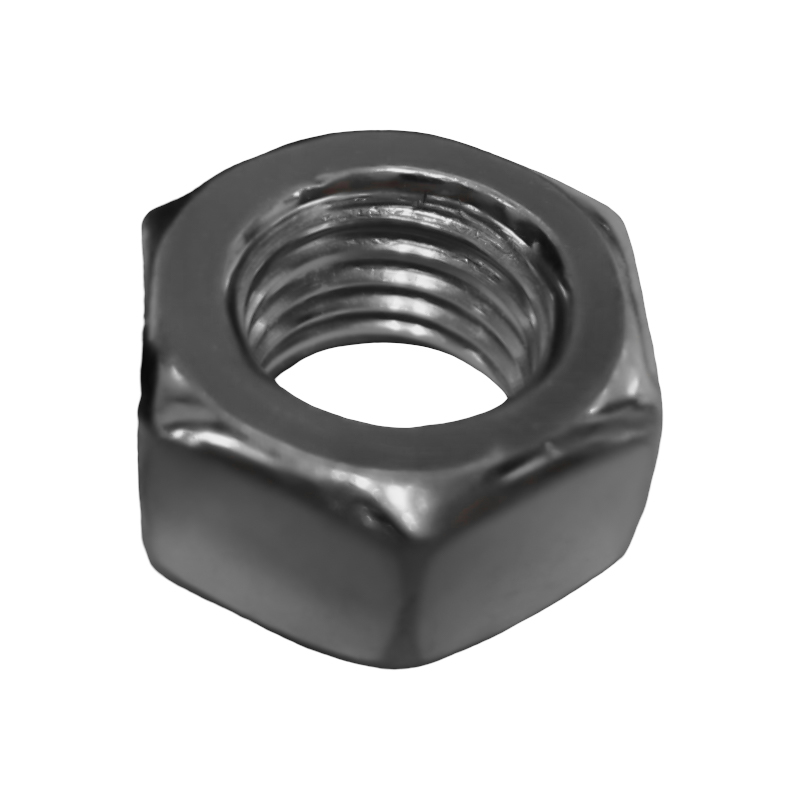
The most common screw nut has six sides. This hexagonal shape — known as a hex nut — is the industry standard in fastener engineering because it provides six flat contact surfaces, giving a wrench or socket multiple gripping angles and reducing the chance of slipping. Hex nuts account for the vast majority of nuts used in construction, automotive, machinery, and general hardware applications worldwide.
That said, not all nuts have six sides. Other configurations exist to serve specific engineering needs:
- Square nuts (4 sides) — an older standard still found in wood framing, T-slot applications, and machine beds where rotation resistance is needed
- 12-point nuts — used in high-torque applications such as engine cylinder heads and aerospace assemblies, offering more wrench engagement positions
- Round / knurled nuts — designed for hand tightening in light-duty or instrumentation contexts, with no flat sides
- Wing nuts — feature two protruding ears for tool-free tightening and removal
The six-sided hex nut remains dominant because it strikes the optimal balance between ease of manufacture, wrench compatibility, and tightening torque. A standard open-end spanner needs only a 60° rotation to re-engage a new flat, making hex geometry highly practical in confined spaces.
| Nut Type | Number of Sides | Typical Application |
|---|---|---|
| Hex Nut | 6 | General fastening, machinery, construction |
| Square Nut | 4 | Wood framing, T-slot tracks |
| 12-Point Nut | 12 | High-torque automotive and aerospace |
| Wing Nut | N/A (2 wings) | Hand-tightened covers and guards |
| Round / Knurled Nut | None (circular) | Instrumentation, light-duty assemblies |
Which Way Do Nuts Go on Bolts?
A nut threads onto a bolt clockwise to tighten and counterclockwise to loosen — this is the standard right-hand thread convention used on virtually all fasteners worldwide. The direction is the same whether you are looking at the nut from above or holding the bolt head stationary: turn the nut to the right (clockwise) to secure it, and to the left (counterclockwise) to remove it.
This is often remembered with the phrase "righty tighty, lefty loosey."
Right-Hand vs. Left-Hand Threads
While right-hand threads cover 99% of applications, left-hand thread fasteners do exist. They are used in situations where rotation during normal operation would cause a standard nut to loosen — for example:
- The left-side pedals on a bicycle (a left-hand thread prevents the pedal from unscrewing as the crank rotates)
- Some grinding wheel arbors and lug nuts on older vehicles
- Certain gas cylinder valves (where left-hand threads indicate flammable gas to prevent accidental wrong connections)
Left-hand thread fasteners are typically marked with an "L," a groove on the bolt head, or a color-coded indicator.
Does It Matter Which Face of the Nut Goes Against the Surface?
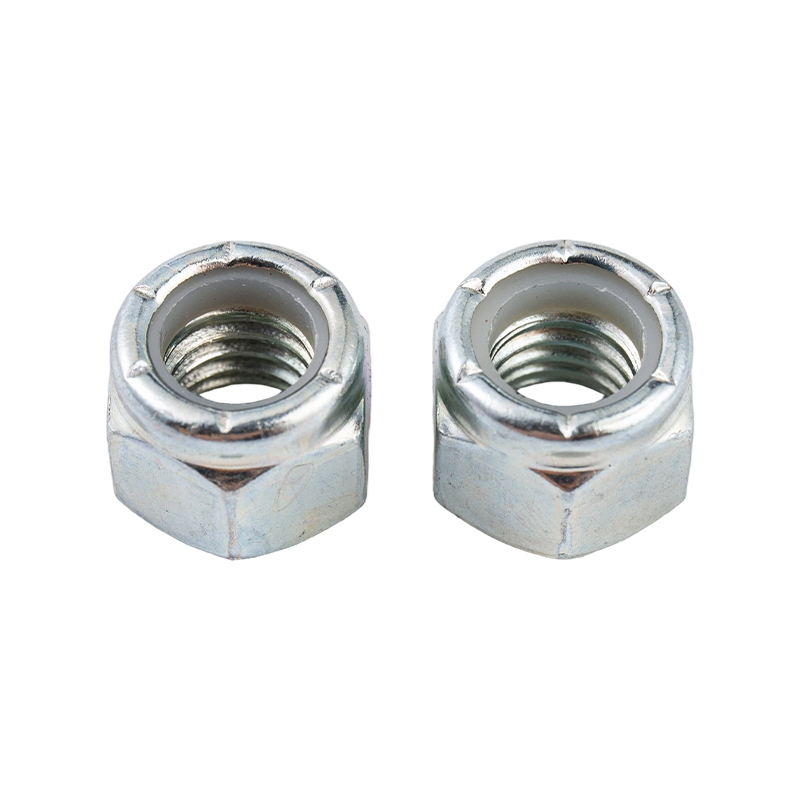
For a standard hex nut, either face can contact the mating surface — both faces are identical. However, for flanged nuts (nuts with a built-in washer-like rim), the flange face must go against the workpiece to distribute clamping load correctly. Installing a flanged nut backwards reduces its effectiveness and can damage soft materials.
What Tools Are Needed for Nuts and Bolts?
Selecting the right tool depends on the nut or bolt drive type, available clearance, and the torque requirement. Below are the most widely used tools for nut and bolt work.
Open-End and Box-End Wrenches (Spanners)
The open-end wrench grips two parallel flats of a hex nut, while the box-end wrench fully encircles the nut for a more secure grip and higher torque. Combination wrenches — open-end on one side, box-end on the other — are the most versatile option for general maintenance. Wrenches are sized by the distance across the flats of the nut (e.g., 13 mm, 17 mm, 19 mm).
Socket Wrenches and Ratchets
Socket sets paired with a ratchet handle allow faster tightening and loosening than fixed wrenches by eliminating the need to reposition after each stroke. Drive sizes — ¼ inch, ⅜ inch, and ½ inch — correspond to the square drive post on the ratchet. Deep sockets are needed when a nut sits partway down a long bolt stud.
Torque Wrench
Wherever a specific clamping force is required — automotive cylinder heads, structural bolts, suspension components — a torque wrench is essential. It prevents both under-tightening (which causes joint loosening) and over-tightening (which can strip threads or crack components). Typical torque values range from 5 N·m for small M6 bolts up to over 300 N·m for large structural fasteners.
Adjustable Wrench (Crescent Wrench)
An adjustable wrench suits a wide range of nut sizes using a single tool, making it useful when a full socket set is unavailable. It is best reserved for lighter-duty work — its jaw can flex slightly under high torque, risking rounding off nut flats.
Pliers and Locking Pliers
Standard needle-nose or slip-joint pliers can hold a bolt shank while turning the nut, but should not be used to grip nut flats — they easily round the corners. Locking pliers (e.g., Vise-Grips) are useful for gripping damaged or rounded nuts that wrenches can no longer hold.
Power Tools: Impact Driver and Impact Wrench
For high-volume assembly or seized fasteners, an impact wrench delivers rapid rotational bursts (impacts) that break loose corroded or overtorqued nuts far more effectively than manual tools. Impact drivers are used with hex-shank nut driver bits for machine screws and smaller bolts. Always use impact-rated sockets with impact wrenches — standard chrome sockets can crack under the shock loads.
Nut Splitter
When a nut is so corroded or seized that it cannot be turned, a nut splitter cracks it open by pressing a hardened chisel blade into the flat of the nut, destroying it without damaging the bolt thread.
Related Products


PRODUCTS
Carbon Steel Fastenerss Rolling Bearings Heavy-Duty Steel Folding Trolleys Swivel Casters Bolt kitsContact
 1st Floor, Building 4, East Side, Jinger Road, Yuxin Town, Nanhu District, Jiaxing City, Zhejiang Province, China
 [email protected][email protected]
 +86-137 0583 8919+86-135 8638 0656
Copyright © Jiaxing Lanyue Metal Technology Co., Ltd. All Rights Reserved.
Privacy
Custom High-Performance Industrial Fasteners Manufacturers, Suppliers
