-
 Lanyue Metal Technology
-
 [email protected]/[email protected]
-
 24 Hour Service - 7 Days a Week

 English
  Español
  Deutsch

Industry News
Industry News
May 12,2026
#6 vs #8 Screws, Pocket Hole Sizes & Carbon Steel Hex Screw Guide
Content
Difference Between #6 and #8 Screws
The difference between #6 and #8 screws comes down to diameter, load capacity, and the applications each size is suited for. In the Unified National screw thread system used in the United States, screw gauge numbers correspond directly to shank diameter: a #6 screw has a major diameter of 0.138 inches (3.51 mm), while a #8 screw measures 0.164 inches (4.17 mm). That 0.026-inch difference may seem minor, but it has meaningful implications for holding strength, pilot hole sizing, and compatibility with hardware.
#6 screws are the lighter-duty option. They are commonly used in thin materials — sheet metal up to 18 gauge, light woodworking joinery, cabinet back panels, and plastic enclosures — where a smaller fastener head is desirable for aesthetics or where material thickness limits the screw length. Their reduced shank diameter means lower shear strength, making them unsuitable for load-bearing connections in structural wood framing or heavy bracket mounting.
#8 screws are the more versatile general-purpose size. They are the default choice for deck building, furniture assembly, subfloor installation, and most interior carpentry applications. The larger diameter provides significantly higher withdrawal resistance — the force required to pull the screw straight out of the material — which is the most relevant strength parameter in wood fastening. In a typical softwood substrate, a #8 screw delivers approximately 20–30% higher withdrawal resistance than a #6 of equal length under equivalent embedment conditions.
Pilot hole sizing also differs: #6 screws typically require a 3/32-inch pilot in hardwood and can often be driven without a pilot in softwood, while #8 screws call for a 7/64-inch pilot in softwood and 1/8-inch in hardwood to prevent splitting. Confusing the two sizes when pre-drilling is a common source of stripped holes and split workpieces in finish carpentry.
What Size Screws for Pocket Holes
Selecting the correct screw size for pocket holes depends on the thickness of the workpiece being joined — not the thickness of the material being drilled into. Pocket hole joinery works by driving a coarse-thread screw at an angle through one board and into the face grain or edge of a second, and the screw must be long enough to achieve adequate thread engagement without breaking through the opposite face.
The industry standard reference for pocket hole screw sizing comes from Kreg Tool, whose jig system defines the following guidelines:
- ¾-inch material (18–19 mm): 1-¼ inch coarse-thread pocket screw, #8 diameter — the most common configuration in cabinet and furniture construction.
- ½-inch material (12–13 mm): 1-inch coarse-thread pocket screw, #8 diameter — used for drawer box sides, thin plywood panels, and lightweight carcass work.
- 1-inch to 1-½ inch material (25–38 mm): 1-½ inch to 2-½ inch coarse-thread screws, #8 to #10 diameter — appropriate for face frame joinery on thicker hardwood stock.
- Sheet goods and plywood (MDF, particleboard): Fine-thread pocket screws of the same length as the equivalent solid wood selection — fine threads grip manufactured panel materials more securely than coarse threads, which tend to strip in the softer substrate.
The most frequent error in pocket hole joinery is using too long a screw, causing the tip to exit through the show face of the receiving board. A secondary mistake is using coarse-thread screws in MDF or melamine-coated particleboard, where the wider thread spacing fails to develop adequate pullout resistance in the low-density core material. For face-frame-to-cabinet-box connections in production cabinetry, #8 × 1-¼ inch fine-thread screws in ¾-inch sheet goods represent the reliable standard across most professional shops.
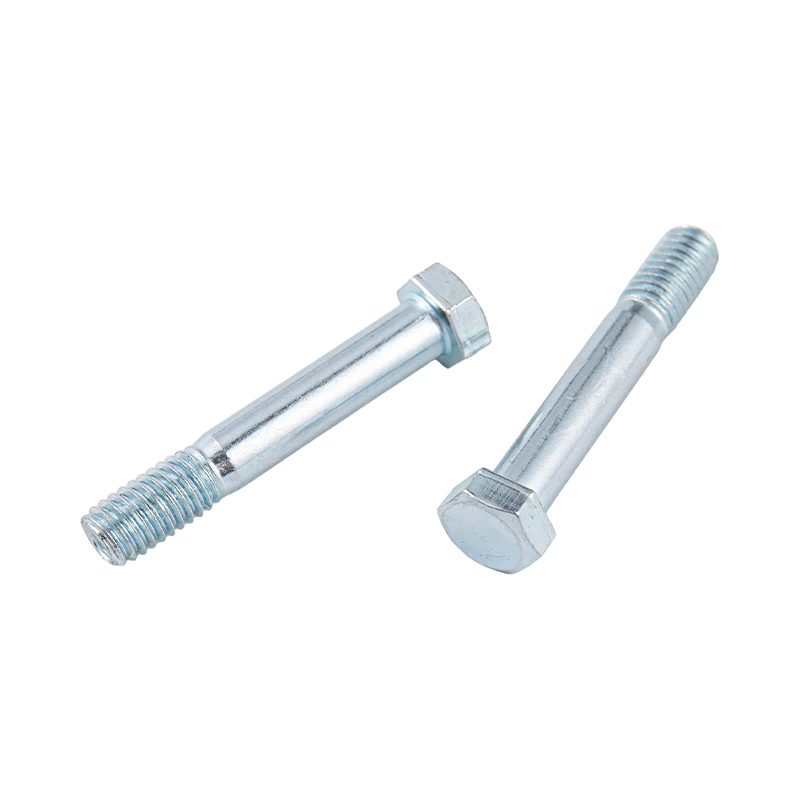
Metric Socket Head Cap Screw Dimensions
Metric socket head cap screws — also called Allen bolts or SHCS — are dimensioned to ISO 4762 (equivalent to DIN 912), the international standard governing their geometry. The key dimensions engineers and buyers reference are head diameter, head height, socket (hex key) size, thread pitch, and recommended tightening torque. All values below apply to the standard coarse-thread series.
| Thread Size | Thread Pitch (mm) | Head Diameter (mm) | Head Height (mm) | Hex Key Size (mm) |
|---|---|---|---|---|
| M3 | 0.5 | 5.5 | 3.0 | 2.5 |
| M4 | 0.7 | 7.0 | 4.0 | 3.0 |
| M5 | 0.8 | 8.5 | 5.0 | 4.0 |
| M6 | 1.0 | 10.0 | 6.0 | 5.0 |
| M8 | 1.25 | 13.0 | 8.0 | 6.0 |
| M10 | 1.5 | 16.0 | 10.0 | 8.0 |
| M12 | 1.75 | 18.0 | 12.0 | 10.0 |
| M16 | 2.0 | 24.0 | 16.0 | 14.0 |
A consistent relationship runs through the ISO 4762 standard: head diameter is nominally 1.5× the thread diameter, and head height equals the thread diameter. This proportionality makes it straightforward to estimate clearance hole and counterbore dimensions when engineering drawings are not available. The counterbore diameter for a flush-seated SHCS should equal the head diameter plus 0.5 mm for M3–M6 and plus 1.0 mm for M8 and above.
Property class (strength grade) is a separate specification. Most commercial metric socket head cap screws are supplied in Class 8.8 (medium-carbon steel, zinc-plated) or Class 12.9 (alloy steel, black oxide), with Class 12.9 delivering roughly 50% higher proof load than Class 8.8 at the same size. For precision machinery, semiconductor equipment, and structural connections requiring maximum fastener reliability, Class 12.9 is the standard specification.
Carbon Steel Hexagon Screws: Grades, Coatings, and Selection
Carbon steel hexagon screws — hex cap screws and hex bolts driven by a spanner or socket wrench — are the most widely used structural fastener type across construction, heavy machinery, automotive assembly, and industrial equipment. Their dominance comes from the combination of high strength-to-cost ratio that carbon steel delivers and the mechanical advantage of the six-sided head, which allows significantly higher tightening torques than Phillips or Torx drive formats.
Carbon Steel Grades
The mechanical properties of carbon steel hex screws are defined by their grade designation, which varies by standard:
- SAE Grade 2 (low-carbon steel): Minimum tensile strength of 510 MPa for sizes up to ¾ inch. Used in non-critical applications such as light structural assemblies, furniture, and general hardware. No marking on the head.
- SAE Grade 5 (medium-carbon steel, quenched and tempered): Minimum tensile strength of 827 MPa. The standard grade for automotive and general engineering applications. Identified by three radial lines on the bolt head.
- SAE Grade 8 (medium-carbon alloy steel): Minimum tensile strength of 1,034 MPa. Specified for high-stress connections including suspension components, heavy equipment, and flange joints operating under dynamic load. Identified by six radial lines.
- ISO Class 8.8 / 10.9 / 12.9: The metric equivalents, dimensioned to ISO 4014 (hex bolt) or ISO 4017 (hex cap screw). Class 10.9 corresponds roughly to SAE Grade 8 in tensile strength; Class 12.9 exceeds it.
Surface Coatings and Corrosion Protection
Bare carbon steel corrodes rapidly in outdoor, humid, or chemically aggressive environments. The choice of surface treatment is as important as the base material grade for long-term fastener performance:
- Zinc electroplating (clear or yellow chromate): The most common coating for indoor and light outdoor use. Provides 72–120 hours of salt spray resistance per ASTM B117. Low cost, widely available, but inadequate for marine or chemical environments.
- Hot-dip galvanizing: Zinc coating applied by immersion in molten zinc at ~450°C, producing a thick, metallurgically bonded layer. Salt spray resistance exceeds 1,000 hours. Standard for structural steel in outdoor construction; the thicker coating can affect thread fit and requires oversize nuts.
- Dacromet / geomet (zinc-aluminum flake coating): Thin-film inorganic coating with 480–720 hours salt spray resistance. No hydrogen embrittlement risk, making it preferred for high-strength Grade 10.9 and 12.9 fasteners where electroplating-induced embrittlement is a concern.
- Black oxide: Minimal corrosion protection (requires oil top-coat for any meaningful barrier), used primarily for aesthetics and mild indoor applications. Common on socket head cap screws in machinery.
Dimensional Standards for Hex Screws
Carbon steel hex cap screws for metric applications are governed by ISO 4017 (full-thread) and ISO 4014 (partial-thread), which specify across-flats (AF) wrench sizes, head height, and thread engagement length. The AF wrench size for standard metric hex screws follows the pattern of approximately 1.5× the thread diameter — an M10 bolt takes a 17 mm wrench, M12 takes 19 mm, and M16 takes 24 mm — though deviations exist in certain national standards and product series. Confirming the actual AF dimension from the supplier's dimensional data sheet is advisable when specifying tooling clearances in assembly fixture design.
Related Products


PRODUCTS
Carbon Steel Fastenerss Rolling Bearings Heavy-Duty Steel Folding Trolleys Swivel Casters Bolt kitsContact
 1st Floor, Building 4, East Side, Jinger Road, Yuxin Town, Nanhu District, Jiaxing City, Zhejiang Province, China
 [email protected][email protected]
 +86-137 0583 8919+86-135 8638 0656
Copyright © Jiaxing Lanyue Metal Technology Co., Ltd. All Rights Reserved.
Privacy
Custom High-Performance Industrial Fasteners Manufacturers, Suppliers
