Lanyue Metal Technology
[email protected]/[email protected]
24 Hour Service - 7 Days a Week
Industry News
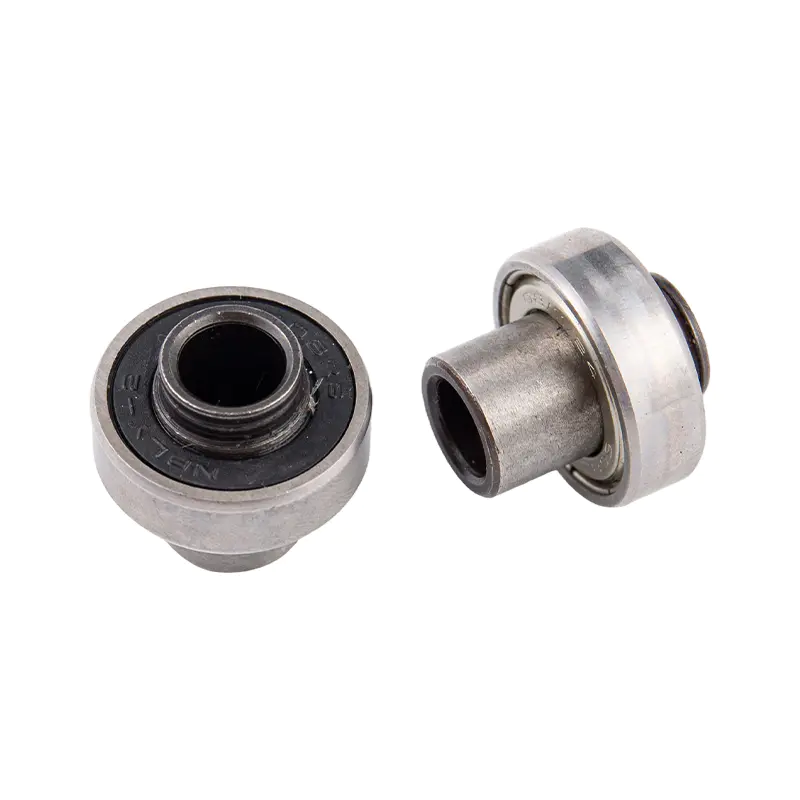
In the realm of mechanical engineering, the metal rolling bearing serves as a fundamental component for reducing rotational friction and supporting axial or radial loads. Achieving peak operational efficiency requires a deep understanding of metallurgy, load distribution, and contact mechanics. This guide examines the critical factors influencing the selection and longevity of high-performance metal rolling bearing systems in demanding industrial environments.
The core distinction in bearing technology lies in the geometry of the rolling elements. While ball bearings utilize point contact to minimize friction at high speeds, roller bearings utilize line contact to distribute heavier loads across a larger surface area. Selecting between ball vs roller metal rolling bearing configurations depends entirely on the application's specific speed-to-load ratio. Engineers must also consider high-precision metal rolling bearing options for CNC machinery or aerospace applications where run-out tolerances are measured in micrometers.
| Bearing Type | Contact Geometry | Load Capacity | Speed Capability |
| Ball Bearing | Point Contact | Moderate (Radial/Axial) | Very High |
| Cylindrical Roller | Line Contact | High (Radial only) | Moderate to High |
| Tapered Roller | Line Contact | Very High (Combined) | Moderate |
The reliability of a bearing is largely dictated by its material composition and heat treatment process. Most industrial bearings utilize high-carbon chromium steel (GCr15), but specialized environments may require stainless steel or ceramic hybrids. Bearing fatigue life calculation, typically expressed as the L10 life, predicts the number of revolutions 90% of a group of identical bearings will complete before the first sign of metal fatigue (spalling) occurs. Improving the purity of the steel used in a metal rolling bearing significantly reduces non-metallic inclusions, thereby extending the fatigue limit and operational uptime.
Premium alloys undergo vacuum degasification to remove impurities, offering a distinct advantage in fatigue resistance compared to standard industrial-grade steels.
| Material Property | Standard Bearing Steel | Premium Clean Steel |
| Hardness (HRC) | 58 - 62 | 60 - 64 |
| Impurity Level | Standard Inclusion Count | Ultra-low Oxygen Content |
| L10 Life Multiplier | 1.0x | 2.5x - 4.0x |
Lubrication is the lifeblood of any rolling element system. The choice between rolling bearing lubrication types—namely, grease versus oil—is driven by operating temperature, speed, and sealing requirements. Oil lubrication is superior for high-speed applications due to its cooling properties, whereas grease is often preferred for "lubricated for life" designs. Proper metal rolling bearing maintenance requires regular analysis of lubricant degradation and contamination, as over 80% of premature failures are attributed to poor lubrication or the ingress of particulates.
Grease provides excellent sealing and ease of maintenance, while oil allows for higher thermal dissipation and higher rotational velocities.
| Criteria | Grease Lubrication | Oil Lubrication (Circulating) |
| Max Speed | Limited by the N factor | Highest possible |
| Cooling Capacity | Poor | Excellent |
| Sealing Complexity | Low (Simplified) | High (Requires pumps/seals) |
To prevent catastrophic equipment failure, engineers must recognize the early symptoms of common metal rolling bearing failure modes. These include adhesive wear, electrical erosion, and false brinelling. Understanding how to install metal rolling bearings correctly is the first step in prevention; using excessive force during mounting can cause micro-indentations in the raceways, leading to premature vibration and noise. Metal rolling bearing vibration analysis serves as a critical diagnostic tool, allowing technicians to identify frequency peaks associated with inner or outer ring defects before the system reaches a failure state.
The optimization of a metal rolling bearing system is a multi-faceted challenge involving precise selection, material integrity, and proactive maintenance. By focusing on bearing fatigue life calculation and implementing advanced rolling bearing lubrication types, industrial operations can significantly reduce energy consumption and downtime. As engineering requirements evolve toward higher speeds and harsher environments, the synergy between material science and precision manufacturing remains the cornerstone of bearing technology.
High precision bearings offer tighter tolerances on dimensions and run-out, which reduces heat generation, minimizes vibration, and allows for significantly higher rotational speeds in applications like spindle drives.
It allows engineers to schedule replacements before actual failure occurs, based on the statistical probability of material fatigue, thus preventing unplanned production halts.
The most common modes include surface-initiated fatigue (due to contamination), adhesive wear (due to poor lubrication), and sub-surface fatigue (natural end of life).
Vibration analysis can "see" inside the machine, identifying specific defect frequencies that indicate which part of the bearing (ball, inner ring, or outer ring) is damaged long before visible signs appear.
Always use proper tools like an induction heater or a dead-blow mallet with a mounting sleeve. Never apply mounting force through the rolling elements, as this causes immediate raceway damage.
Contact
1st Floor, Building 4, East Side, Jinger Road, Yuxin Town, Nanhu District, Jiaxing City, Zhejiang Province, China
[email protected][email protected]
+86-137 0583 8919+86-135 8638 0656
Copyright © Jiaxing Lanyue Metal Technology Co., Ltd. All Rights Reserved.
Custom High-Performance Industrial Fasteners Manufacturers, Suppliers