-
 Lanyue Metal Technology
-
 [email protected]/[email protected]
-
 24 Hour Service - 7 Days a Week

 English
  Español
  Deutsch
Industry News
Industry News
Jan 08,2026
The Ultimate Guide to Selecting High-Performance Industrial Fasteners
In the intricate world of modern manufacturing and construction, the integrity of an entire structure often hinges on its smallest components. High-performance industrial fasteners are the unsung heroes, providing the critical clamping force, shear strength, and fatigue resistance required for safety, durability, and efficiency. For engineers, procurement specialists, and project managers, selecting the right fastener is not a minor detail—it's a foundational engineering decision. This guide delves deep into the critical considerations, materials, and applications that define this essential sector, empowering you to make informed choices for your most demanding projects.
Content
- 1 Understanding the Critical Role of Fasteners in Modern Industry
- 2 Key Material Choices for Demanding Environments
- 3 Engineering the Perfect Hold: Coatings and Treatments
- 4 Specialized Fastener Types and Their Critical Applications
- 5 Navigating Standards and Specifications
- 6 The Path to Partnership: Selecting a Supplier
- 7
- 8 FAQs on High-Performance Industrial Fasteners
- 8.1 1. What is the main difference between a high-performance fastener and a standard commercial-grade fastener?
- 8.2 2. How do I choose between a stainless steel and a coated carbon steel fastener?
- 8.3 3. Why do some critical applications require specific tightening procedures (torque vs. tension)?
- 8.4 4. What causes fastener loosening, and how can it be prevented?
- 8.5 5. Can high-temperature fasteners be reused?
Understanding the Critical Role of Fasteners in Modern Industry
Beyond simple nuts and bolts, high-performance fasteners are precision-engineered components designed to withstand extreme conditions. Their failure can lead to catastrophic equipment downtime, safety hazards, and significant financial loss. Therefore, understanding their role is paramount.
Why Performance Specifications Matter
- Safety and Reliability: They are the first line of defense against mechanical failure in critical assemblies.
- Operational Longevity: Correctly specified fasteners resist vibration, corrosion, and thermal cycling, extending asset life.
- Cost-Efficiency: Preventing failure reduces maintenance costs and unplanned downtime, offering a strong return on investment.
Companies like Jiaxing Lanyue Metal Technology Co., Ltd., operating from the manufacturing hub of the Yangtze River Delta, understand this deeply. Their commitment to a rigorous ISO 9001 quality management system ensures that every batch of fasteners meets precise performance criteria, aligning with the philosophy of "Striving for Excellence, Innovating for the Future."
Key Material Choices for Demanding Environments
The base material of a fastener dictates its fundamental properties. The choice is a balance between strength, weight, corrosion resistance, and cost.
Stainless Steel vs. Alloy Steel
Choosing between stainless steel and alloy steel often centers on the trade-off between corrosion resistance and ultimate tensile strength.
| Property | Stainless Steel (e.g., 304, 316) | Alloy Steel (e.g., 4140, 4340) |
| Corrosion Resistance | Excellent, especially Grade 316 in chloride environments. | Poor; requires plating or coating for protection. |
| Tensile Strength | Good to High (up to ~900 MPa for some grades). | Very High (can exceed 1500 MPa after heat treatment). |
| Best For | Food processing, marine, chemical, and architectural applications. | High-stress structural applications, heavy machinery, automotive drivetrains. |
Specialized and Exotic Alloys
For the most extreme applications, materials like titanium, Inconel, and duplex stainless steels are employed. corrosion resistant fasteners for chemical processing are a prime example, where materials must withstand highly acidic or caustic environments without degrading. Titanium offers an exceptional strength-to-weight ratio and superb corrosion resistance, making it ideal for aerospace, while nickel-based superalloys like Inconel are chosen for their performance in high-temperature and high-pressure scenarios, such as in power generation turbines.
Engineering the Perfect Hold: Coatings and Treatments
Surface engineering is what transforms a quality metal part into a reliable, long-lasting fastener. It addresses wear, friction, and corrosion.
Zinc Plating vs. Hot-Dip Galvanizing
These are two common methods for protecting steel fasteners, but they serve different purposes and offer varying levels of protection.
| Aspect | Zinc Plating (Electroplating) | Hot-Dip Galvanizing |
| Coating Thickness | Thin (5-25 microns). | Very Thick (45-85 microns). |
| Corrosion Protection | Good for indoor or mild environments. | Excellent; ideal for outdoor, industrial, and marine settings. |
| Appearance & Dimensional Tolerance | Smooth, shiny finish; precise dimensions maintained. | Dull gray, may have a spangled texture; coating can be uneven on threads. |
Advanced Anti-Corrosion Solutions
When standard zinc isn't enough, advanced coatings like Geomet, Dacromet, or proprietary polymer coatings provide superior barrier and sacrificial protection. This is crucial for components like high strength bolts for structural steel connections, which are often exposed to the elements for decades on bridges, towers, and stadiums. These specialized coatings ensure consistent clamp load is maintained over the structure's lifetime by preventing thread galling and seizing, a critical factor for both safety and maintenance accessibility.
Specialized Fastener Types and Their Critical Applications
Different applications demand unique fastener designs. Here we explore some specialized categories essential for industrial success.
Vibration-Resistant Fastening Solutions
In dynamic environments with constant motion or shock, standard fasteners can loosen, leading to failure. This is where solutions for vibration resistant locking fasteners for heavy machinery come into play. These include:
- Prevailing-Torque Locking Fasteners: Nylock nuts or all-metal lock nuts that create friction on the threads.
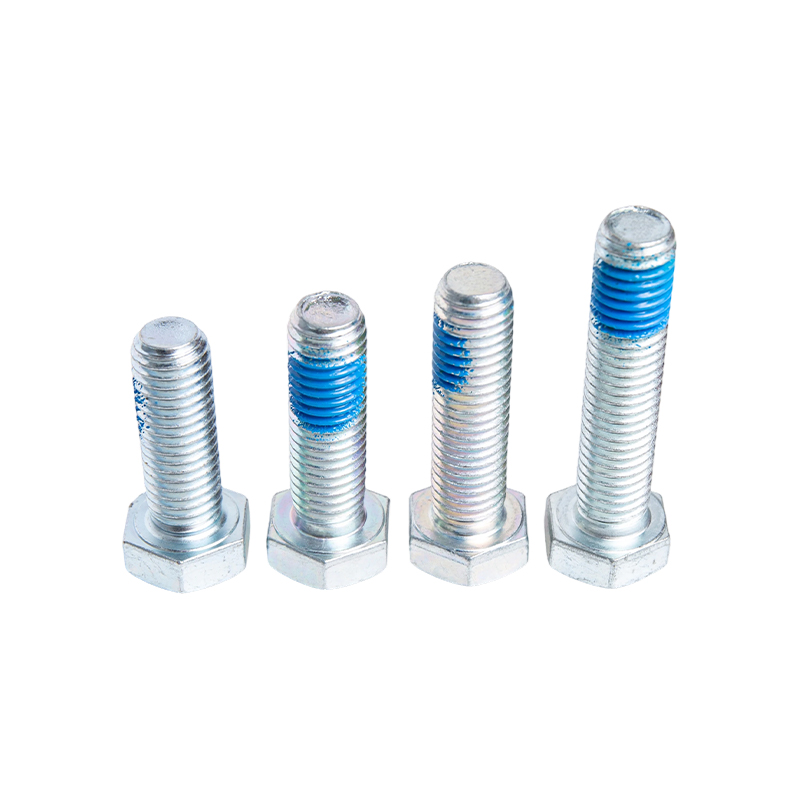
- Chemical Locking: Applying thread-locking adhesive (e.g., Loctite) during assembly.
- Mechanical Locking: Using castellated nuts with cotter pins, serrated flange nuts, or deformed thread lock bolts.
Each method has its place, with the choice depending on the required reusability, temperature range, and the severity of vibration.
Fasteners for High-Temperature and Pressure Systems
Applications like engines, boilers, and processing reactors require fasteners that maintain their strength and don't creep under load at elevated temperatures. high temperature fasteners for engine and exhaust systems are typically made from heat-resistant alloys like A286 stainless steel or Inconel 718. A critical consideration here is the relaxation behavior—the loss of clamp force over time at high temperature. Engineers must select a material whose yield strength at the operating temperature exceeds the required preload stress.
The Precision of Self-Clinching Fasteners
In the world of sheet metal fabrication and electronics enclosures, self-clinching fasteners for sheet metal fabrication provide a permanent, high-strength thread in thin panels. They install by pressing into a pre-punched hole, where they displace the surrounding metal, locking securely in place. This eliminates the need for a welded nut or a loose backing nut, providing a flush finish on one side and a reliable threaded stud on the other. They are indispensable for creating strong, clean attachment points in computer servers, telecom racks, and industrial control panels.
Adherence to international standards is non-negotiable for ensuring interchangeability, quality, and safety.
Major Standardization Bodies
- ISO (International Organization for Standardization): Global standards ensuring worldwide compatibility.
- ASTM (American Society for Testing and Materials): Widely used standards defining material properties and test methods.
- DIN (Deutsches Institut für Normung): German/European standards known for rigorous engineering.
- JIS (Japanese Industrial Standards): Common in Asian manufacturing.
Specifications like ASTM A325 or ISO 898-1 define not just dimensions, but also mechanical properties such as proof load, yield strength, and hardness. Understanding these specs is key to selecting the right High-performance industrial fasteners for your global projects.
The Path to Partnership: Selecting a Supplier
Choosing a supplier goes beyond price per piece. It's about securing a reliable partner for your supply chain.
Key Supplier Qualifications
- Certified Quality Systems: ISO 9001 certification is a baseline for consistent process control.
- Technical & Engineering Support: Ability to assist with material selection, design review, and failure analysis.
- Testing and Traceability: Full material certifications (mill test reports) and the ability to perform mechanical tests.
- Manufacturing Capability and Flexibility: Capacity for both standard and custom fastener production.
A partner like Jiaxing Lanyue Metal Technology Co., Ltd. embodies this approach. Their specialization in precision metal and engineering plastic products, backed by a robust quality system, positions them to deliver high strength bolts for structural steel connections as reliably as they provide corrosion resistant fasteners for chemical processing. Their location in the Yangtze River Delta provides access to a mature industrial ecosystem, facilitating efficient production and logistics for partners worldwide.

FAQs on High-Performance Industrial Fasteners
1. What is the main difference between a high-performance fastener and a standard commercial-grade fastener?
High-performance fasteners are engineered with stricter material controls, precise heat treatment, and rigorous testing to meet exacting mechanical and environmental specifications (e.g., ASTM, ISO). They have guaranteed minimum strength grades, controlled hardness, and often feature specialized coatings. Standard commercial fasteners may have more variable material properties and are suitable for non-critical, low-stress applications.
2. How do I choose between a stainless steel and a coated carbon steel fastener?
The choice primarily depends on the environment and required strength. Choose stainless steel (e.g., 316) for excellent inherent corrosion resistance in harsh environments, even if scratched. Choose coated carbon/alloy steel (e.g., galvanized or with an advanced coating) when you need higher tensile strength at a lower cost, and the coating can be adequately maintained or is suitable for the specific environment.
3. Why do some critical applications require specific tightening procedures (torque vs. tension)?
Accurate preload (clamp force) is vital for joint integrity. Torque is an indirect measure of preload, but friction can cause significant variation. For critical joints like high strength bolts for structural steel connections, direct tensioning methods (e.g., hydraulic tensioners) or turn-of-nut methods are specified to achieve a more accurate and consistent preload, ensuring the joint performs as designed.
4. What causes fastener loosening, and how can it be prevented?
Loosening is primarily caused by dynamic loads, vibration, and shock that overcome thread friction. Prevention requires using vibration resistant locking fasteners for heavy machinery. Effective solutions include properly designed prevailing-torque nuts, serrated flange nuts, thread-locking adhesives, or mechanical lock wires, selected based on the application's service conditions and maintenance requirements.
5. Can high-temperature fasteners be reused?
Reuse is generally not recommended for critical applications. Fasteners like high temperature fasteners for engine and exhaust systems undergo stress relaxation and creep at elevated temperatures, which can permanently alter their metallurgical properties and clamping performance. Reusing them risks under-torquing and joint failure. Always consult the engine or equipment manufacturer's specifications regarding reuse.
Related Products

PRODUCTS
Carbon Steel Fastenerss Rolling Bearings Heavy-Duty Steel Folding Trolleys Swivel Casters Bolt kitsContact
 1st Floor, Building 4, East Side, Jinger Road, Yuxin Town, Nanhu District, Jiaxing City, Zhejiang Province, China
 [email protected][email protected]
 +86-137 0583 8919+86-135 8638 0656
Copyright © Jiaxing Lanyue Metal Technology Co., Ltd. All Rights Reserved.
Privacy
Custom High-Performance Industrial Fasteners Manufacturers, Suppliers
