-
 Lanyue Metal Technology
-
 [email protected]/[email protected]
-
 24 Hour Service - 7 Days a Week

 English
  Español
  Deutsch

Industry News
Industry News
Apr 13,2026
Carbon Steel Hexagon Screws: Types, Grades, and Torque Guidelines
Content
- 1 What Makes Carbon Steel the Dominant Material for Hexagon Screws
- 2 Grade Classification: Matching Mechanical Properties to Load Requirements
- 3 Surface Coatings and Corrosion Protection Options
- 4 Torque Specifications and Practical Tightening Guidelines
- 5 Dimensional Standards and Thread Form Compliance
What Makes Carbon Steel the Dominant Material for Hexagon Screws
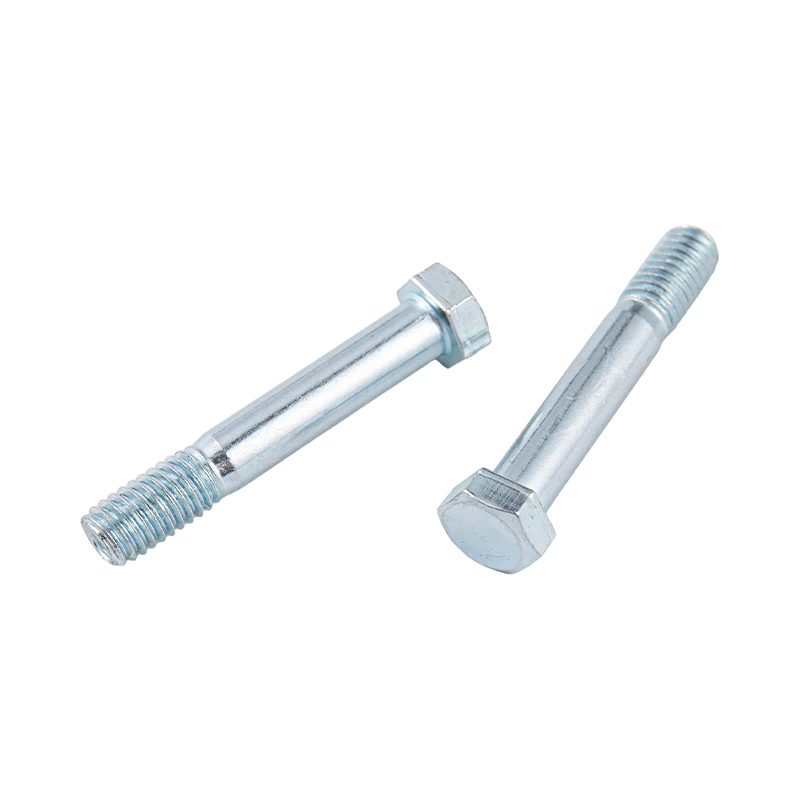
Carbon steel accounts for the overwhelming majority of hexagon screws produced globally — and for good reason. Its combination of high tensile strength, machinability, and cost efficiency makes it the default choice across construction, automotive, machinery, and structural assembly. Unlike stainless steel, carbon steel can be heat-treated to achieve a much wider range of hardness levels, allowing manufacturers to tailor mechanical properties to the specific demands of each application.
The carbon content itself — typically ranging from 0.15% to 0.60% — is the primary factor governing a screw's hardness, ductility, and weldability. Low-carbon grades (below 0.25%) offer excellent formability and are used where moderate clamping force is sufficient. Medium-carbon grades (0.25%–0.60%) are the workhorses of the fastener industry, routinely heat-treated to achieve Grade 8.8 or higher performance in demanding structural joints.
One important trade-off is corrosion resistance. Carbon steel without surface treatment will oxidize in humid or outdoor environments. This is not a flaw to avoid, but a design constraint to engineer around — selecting the appropriate coating, plating, or material upgrade is a standard part of specifying carbon steel hexagon screws for outdoor or wet conditions.
Grade Classification: Matching Mechanical Properties to Load Requirements
Hexagon screws are graded by their mechanical performance, not by their raw material composition alone. For carbon steel fasteners, the two most widely referenced systems are the ISO metric property class system (used in most of the world) and the SAE grade system (dominant in North America).
| ISO Property Class | SAE Equivalent | Min. Tensile Strength | Typical Application |
|---|---|---|---|
| 4.6 | SAE Grade 2 | 400 MPa | Light assemblies, non-structural joints |
| 8.8 | SAE Grade 5 | 800 MPa | Structural steel, machinery, automotive |
| 10.9 | SAE Grade 8 | 1040 MPa | High-load joints, heavy equipment, flanges |
| 12.9 | — | 1220 MPa | Critical aerospace and precision engineering |
Grade 8.8 is the most widely specified carbon steel hex screw in industrial procurement, offering a well-balanced combination of strength and ductility at a competitive price point. Grade 10.9 is used when joint preload requirements exceed what 8.8 can reliably deliver — common in flanged pipe connections, engine mounting, and heavy structural brackets. Specifying a higher grade than necessary is rarely beneficial and can introduce brittleness risks if the material is over-hardened.
Surface Coatings and Corrosion Protection Options
Bare carbon steel corrodes rapidly in the presence of moisture and oxygen. Surface treatment is therefore not optional for most applications — it is a core part of the fastener specification. The right coating choice depends on the exposure environment, required service life, and whether electrical conductivity or paint adhesion are factors.
- Zinc electroplating (blue or yellow passivation): The most common and economical option. Provides moderate corrosion resistance — typically 72–200 hours in salt spray testing (ASTM B117). Suitable for indoor assemblies and mild outdoor exposure with maintenance.
- Hot-dip galvanizing: Produces a thick zinc coating (45–85 µm) with far superior corrosion resistance, commonly exceeding 1,000 hours in salt spray. The coating adds dimensional bulk, so pre-galvanized hex screws are typically manufactured with slightly oversized threads to maintain fit after coating.
- Dacromet / geomet coating: A water-based zinc-aluminum coating applied without electroplating. Popular in automotive and outdoor structural applications, with excellent resistance to hydrogen embrittlement — a key advantage for high-strength grades like 10.9 and 12.9.
- Black oxide: A chemical conversion coating offering minimal corrosion protection on its own, but used where a low-reflectance, aesthetically uniform finish is required. Usually combined with an oil or wax topcoat to improve moisture resistance marginally.
- Phosphate + oil: A common treatment for high-strength screws to prevent hydrogen embrittlement while providing a degree of corrosion protection. Often the default finish for Grade 10.9 and 12.9 fasteners in machined assemblies.
Note that hydrogen embrittlement is a genuine risk with electroplated high-strength fasteners. ISO 4042 and ASTM F1941 mandate baking (typically 190°C for 4–24 hours) after electroplating for screws with tensile strength above 1,000 MPa to drive out absorbed hydrogen before it causes delayed fracture.
Torque Specifications and Practical Tightening Guidelines
Correct torque application is arguably more important than fastener selection itself. An under-torqued hex screw will lose clamp load under vibration; an over-torqued one risks yielding or fracturing the shank. Target clamp load — not torque — is the true design goal, but torque remains the most practical proxy on the assembly floor.
Torque values are highly sensitive to the friction coefficient of the bearing surfaces and thread flanks. A dry, unlubricated carbon steel screw and nut pair will behave very differently from the same fastener lightly oiled or wax-coated. Most published torque tables assume a friction coefficient (µ) of approximately 0.12–0.14 for lightly oiled steel-to-steel contact. If your assembly uses a different lubricant, dry condition, or anti-seize compound, torque values must be recalculated accordingly.
As a general guideline for Grade 8.8 carbon steel hex screws under lightly oiled conditions:
- M8 × 1.25: approximately 23–25 Nm
- M10 × 1.5: approximately 46–50 Nm
- M12 × 1.75: approximately 79–85 Nm
- M16 × 2.0: approximately 195–210 Nm
- M20 × 2.5: approximately 380–410 Nm
For safety-critical or high-cycle applications, torque-angle tightening or direct tension indicators (DTIs) provide more reliable joint preload than torque wrenches alone. In structural steel construction, EN 1090 and AISC 360 specify approved tightening methods for high-strength hex bolts in slip-critical connections, including snug-tight plus turn-of-nut procedures as an alternative to calibrated wrench torquing.
Dimensional Standards and Thread Form Compliance
Carbon steel hexagon screws are manufactured to a range of international dimensional standards. ISO 4017 (full-thread hex screw) and ISO 4014 (partial-thread hex bolt) are the most widely referenced globally, governing head dimensions, thread tolerance, and shank geometry for metric fasteners. DIN 931 and DIN 933 — the predecessor German standards — remain in widespread use by legacy procurement specifications, though they are functionally near-identical to their ISO equivalents.
In North America, ASME B18.2.1 governs inch-series hex cap screws, with thread forms conforming to the Unified National Coarse (UNC) or Fine (UNF) series. Thread pitch selection between coarse and fine is a recurring specification decision:
- Coarse thread (standard metric pitch): Faster assembly, more tolerant of thread damage, and better suited for soft base materials or applications where the screw is frequently removed and reinstalled.
- Fine thread: Greater resistance to loosening under vibration due to a shallower helix angle, higher clamp load per unit torque input, and better fatigue resistance in precision-machined assemblies.
Head-to-wrench size compatibility is another practical concern. ISO and DIN hex screws follow different across-flat (AF) conventions for certain sizes — notably M10 and M12 — which can cause tool compatibility issues on mixed-standard production lines. Confirming AF dimensions against the applicable standard before tooling up for high-volume assembly prevents costly rework.
Related Products


PRODUCTS
Carbon Steel Fastenerss Rolling Bearings Heavy-Duty Steel Folding Trolleys Swivel Casters Bolt kitsContact
 1st Floor, Building 4, East Side, Jinger Road, Yuxin Town, Nanhu District, Jiaxing City, Zhejiang Province, China
 [email protected][email protected]
 +86-137 0583 8919+86-135 8638 0656
Copyright © Jiaxing Lanyue Metal Technology Co., Ltd. All Rights Reserved.
Privacy
Custom High-Performance Industrial Fasteners Manufacturers, Suppliers
